By Julie Schlesselman, Local History & Genealogy Department Manager, FCPLD
This article ran in the August 12 and 19, 2026, editions of the Brookville American and will appear in Forgotten Franklin County V. 7, which is slated to be ready in November of this year.
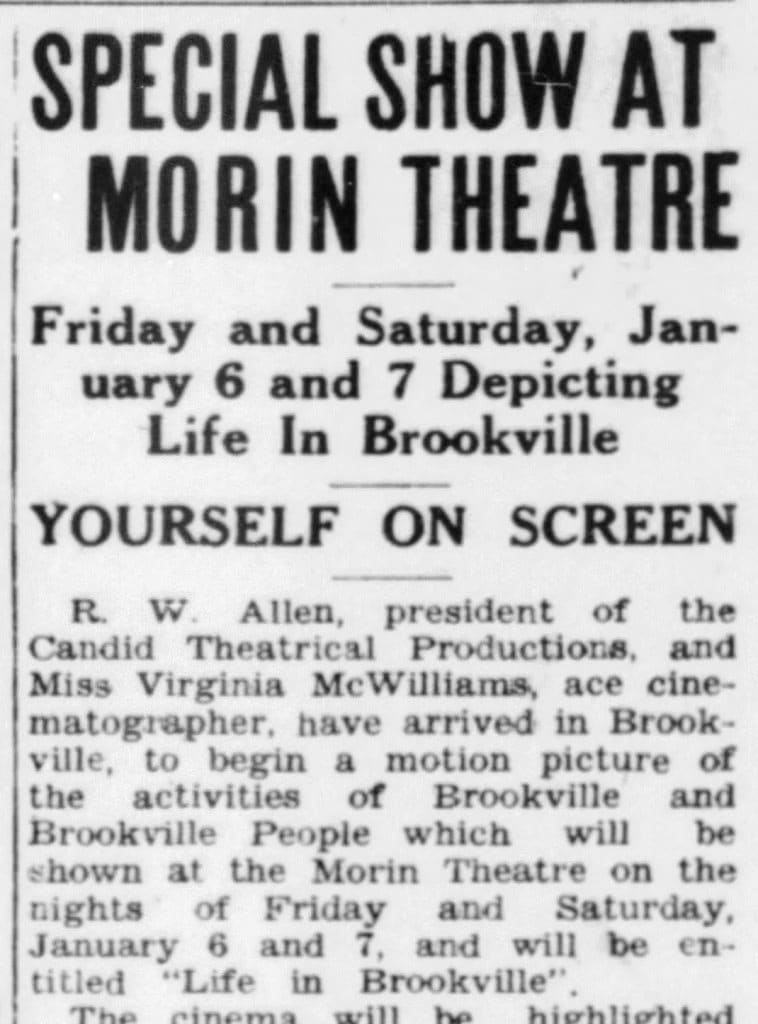
“Life in Brookville”…that was the name of the movie. Yes, a movie made in Brookville – a candid film of all local scenes featuring all local people. Nothing rehearsed.
“What happened to the movie?” That’s a question I’ve gotten in the past, more than once – and again, just recently.
Each time someone asks about the movie, I’d try to do a little more research to see if I could find out exactly what happened to it. Each time, with little luck. There is absolutely nothing to easily be found regarding this film. This most recent inquiry I had about it, however, made me double down and spend well over a month of constant research regarding it.
Since numerous people have asked me about this movie, others will too, so I figured I’d just throw my answer out there now, as I have it theorized, in hopes that someone will prove me wrong and give me the exact answers I need.
So, to make a short story long….from all of the facts I discovered and people I contacted, so far, this two-part narrative is everything I currently know about the movie, “Life in Brookville,” and the man, R.W. Allen, who produced it.
It was December of 1938 when filmmakers R.W. Allen and Virginia McWilliams came to Brookville to shoot scenes in town. Their big production was to be shown at the brand new Morin Theater on W. 4th Street in early 1939. The film was to include “exclusive aerial pictures,” and nearly 2,000 faces of local people doing local things such as attending Christmas parties and club meetings, walking along the town’s streets, people shopping, etc., and all in Technicolor, which is interesting in its own right considering the two iconic films, The Wizard of Oz and Gone with the Wind, which both premiered in late 1939, helped to popularize the common use of color in cinema. Small town home movies shot in color were a somewhat novel idea.
So who would care about a movie about Brookville? Brookville residents and anyone else in Franklin County who made a trip to town to play a part in the film. “Life in Brookville” was geared towards common people. Allen advertised that “hometown talent” was the feature of each of his productions. His portrayals were a fun and innovative way for people to secure the once-in-a-lifetime opportunity to see themselves on a big screen.
At that time in history, everyone loved movies. They were one of the most popular forms of entertainment; there was no television yet. People loved seeing their favorite actors on the big screen, and what could be more exciting to residents of a small town than seeing themselves on the big screen too?
And that’s what the “Life in…” movies did. They gave the common folk the once-in-a-lifetime opportunity to see themselves and their friends and neighbors on a movie screen in an honest to goodness theater.
“Life in…” movies. There was an entire series of them, and believe it or not, made for about 30 years, with the title varying to keep it modern with the times. I hadn’t realized Allen’s hometown movies were produced for that long until my last round of research, where I concentrated on finding out more about the producer, R.W. Allen, since searching for our movie yielded absolutely nothing.
It seems that in 1938 R.W. Allen, president of Candid Theatrical Productions, had an idea to create candid films – films that were guaranteed to be a hit in any small town he visited and, hopefully, a money maker. In November of 1938, he landed in Rush County, Indiana, to film “Life in Rushville.” Apparently, Allen and his “ace Hollywood cinematographer,” Virginia McWilliams, had just come from Greensburg, Indiana, where they had just finished a film that had attracted the largest audience in the history of Greensburg’s theater.
Brookville was one of the earliest movies made by Allen – possibly his fifth, as in 1938, it is known he made “Life in” Greensburg, Rushville, North Vernon, Madison, and Brookville – all Indiana towns.
Why make these movies in Indiana? It seems that R.W. Allen was from our state. From all public records, marriage records, divorce records, and birth records. The R.W. Allen who operated what he then called Candid Theatrical Productions should be Robert Wilson Allen, born on Christmas Day in 1915 in Salem, Washington County, Indiana. His parents should have been Charles Russell Allen and Ada Creamer Allen. I say should have been because biographical information about what I would have thought to be a well-known Hoosier is practically non-existent. And to make matters more difficult, there is also another filmmaker, a famous one, with the exact same name, who lived at approximately the same time as the Indiana native R.W. Allen.
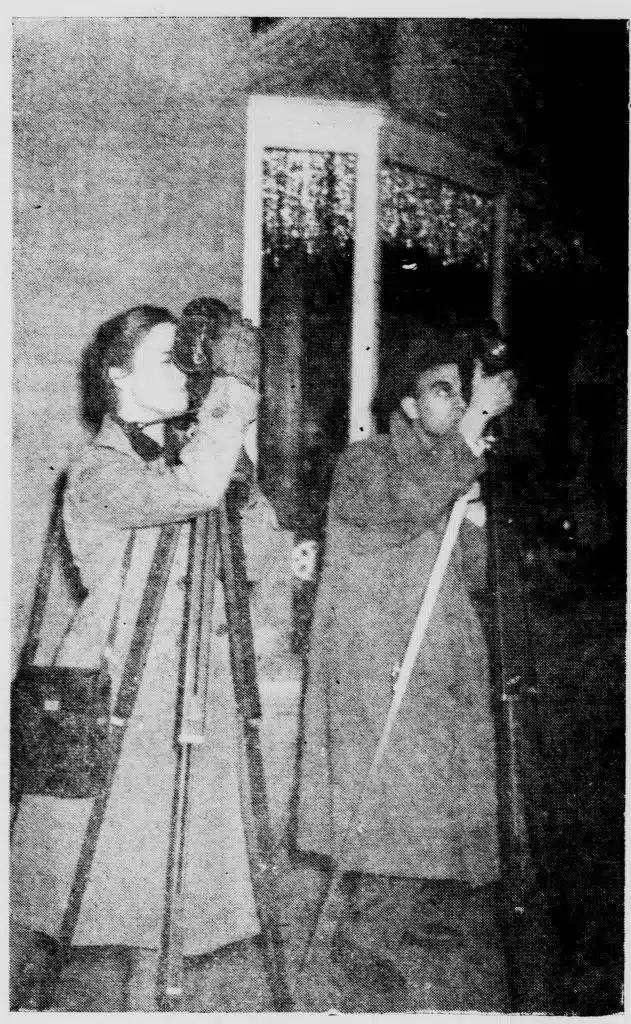
Exactly how exciting this Brookville film may have been is in the eye of the beholder. If someone were to watch it now, it would be interesting for the fact that areas common to the contemporary generation can be viewed in the backgrounds of the folks being filmed almost 90 years ago. Someone watching may not be too interested in the people unless they are a historian and want to study common historical cultural attributes, or perhaps watch because they may be able to identify a face or two. The scenes here were shot in the winter – so was there snow on the ground? If any country scenes were shot, there would be no foliage on trees, which surely would have made places more visible and identifiable.
Depending on the time of year, Allen and his crew were filming in a town, any special events going on were always captured, such as Easter egg hunts, Memorial Day parades, 4th of July celebrations, etc., and in the case of Brookville, it was Christmas and New Year’s events that were captured.
R.W. Allen spent his 23rd birthday in Brookville. It’s not an important fact, and only possibly of interest to locals, but when he and his crew were here, where did they stay? There were a variety of tourist homes and boarding houses in Brookville, or did they stay at the Valley House Hotel? The newspapers never said.
Over the years, accompanying sound varied in Allen’s movies. They were silent, had a musical background to accompany them, or, in later years, actually narrated. I would think since Brookville was one of Allen’s earliest films that it would have been silent. Perhaps a musical score would have played along, but there is nothing in writing to confirm this.
What happened to the film? It’s difficult to say, but multiple scenarios are possible. Since this was one of Allen’s earliest ventures, did he have his filmmaking, advertising, and showing procedures established- ones that he would follow for the next few decades- or were these first few attempts at making hometown movies learning experiences? Did he not have established methods until his endeavor took off the following year, and did Brookville, along with the other four towns filmed in 1938, end up being prototypes and learning experiences?
At the young age of just turning 23, Allen must have been a master at his craft, for one had to shoot many hundreds of feet of film, shot without any continuity, pull the best scenes out, and put them together so they tell a smooth story. Just because it was a silent, candid film didn’t mean that it could be willy-nilly. It had to have a flow and nice viewing quality to it. It was shown for two days in the local theater, but was a copy left behind for posterity?
Most newspaper stories about these hometown movies claim that after Allen made a movie, a copy of the movie was supposed to be given to the local Chamber of Commerce for use as they saw fit in the future. Was that the case in Brookville? Since it was one of the first ones Allen made, maybe not. He was still developing his strategy to get towns to have his company produce hometown movies. If a copy had been left here, however, with the local Chamber or Businessmen’s Association, what happened to it? Was it passed town to each successive president of the organization? Was it given to the most prominent businessman in town for safekeeping? Did it remain at the local movie house because that’s where everyone would know where it was kept? Scenarios abound, but more than likely, if a copy had been left in Brookville, it would have been stored in “safekeeping”…that is, until it was ultimately disposed of for one reason or another, such as it was just old, or it faded, or maybe the film broke. Each time I tried to do research, my assumption has always been that “Life in Brookville” no longer exists. However, that was also based on my assumption that I thought R.W. Allen was using 35mm movie film.
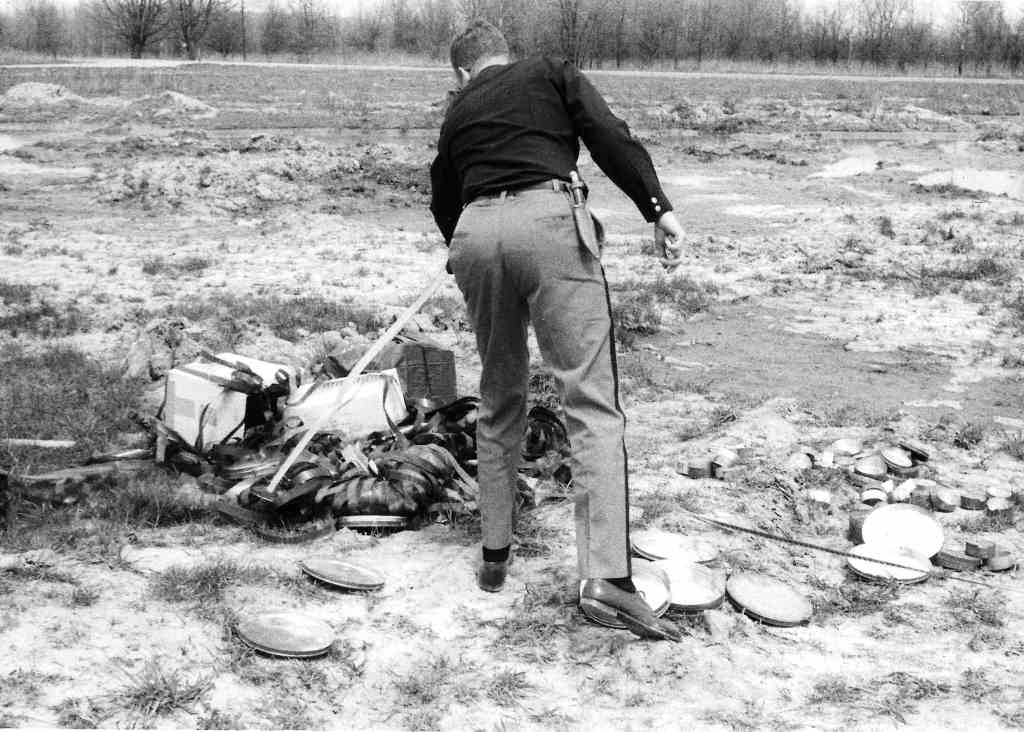
In John Newman’s collection, which I am still sorting through, a few odd small black-and-white photos were discovered. They were of men out in the countryside setting something on fire. Of course, there was no explanation on the back, but my tenacity paid off, and when I finally asked the right person, Dr. Jim Senefeld of Tennessee knew what the photos were documenting.
Jim said that when John Newman was working at the state level in Indianapolis in the late 1960s, he and others discovered canisters of nitrate films; at what facility is unclear. These types of films, being very unstable and volatile, alarmed the trained archivist and historian, and John did his public duty and destroyed the films that could potentially burst into flames at any moment. John and a police officer took dozens of full film canisters far out into the countryside, and the films were set ablaze to burn out at their own pace. What was on those films is a mystery, as I have not found any document stating the destruction process or the content of the films. Had it not been for Jim Senefeld, I would just have copies of black-and-white pictures with an enigmatic subject. Point being, were the films destroyed by Newman some of R.W. Allen’s small-town films or “Life in Brookville”?
At first I thought this was the fate of all of Allen’s films, but written and photographic evidence from newspaper stories regarding his filming endeavors leads me to believe that R.W. Allen shot his hometown movies on 16mm film. He was in Madison, Indiana, shooting before he came to Brookville, and in mid-December 1938, Madison reporters claimed that he was using the latest type of automatic hand cameras.
This would have made much more sense. 16mm film was invented in 1923 and was a safer, more affordable alternative to traditional 35mm motion picture film. It became popular for amateurs and professionals, especially for those focused on educational and industrial filmmaking. 16mm film cameras could go on location and be held by hand. Such productions as those created by Allen were unimaginable before this type of film became popular. The general population of the 1940s would have had access to this type of film and home movie cameras, but it would have been primarily the wealthy families and upper-middle class who could afford the hobby.
It seems that in 1938 and part of 1939, Allen concentrated on making films in Indiana. By mid- to late-1939, he was venturing out of state and was filming in Wisconsin. The next 2-3 years would see R.W. Allen and his crew traveling to small towns in the East and Midwest. So, can any assumptions about the whereabouts of the Brookville movie be made by researching the producer, Robert Wilson Allen, and not the movie itself?
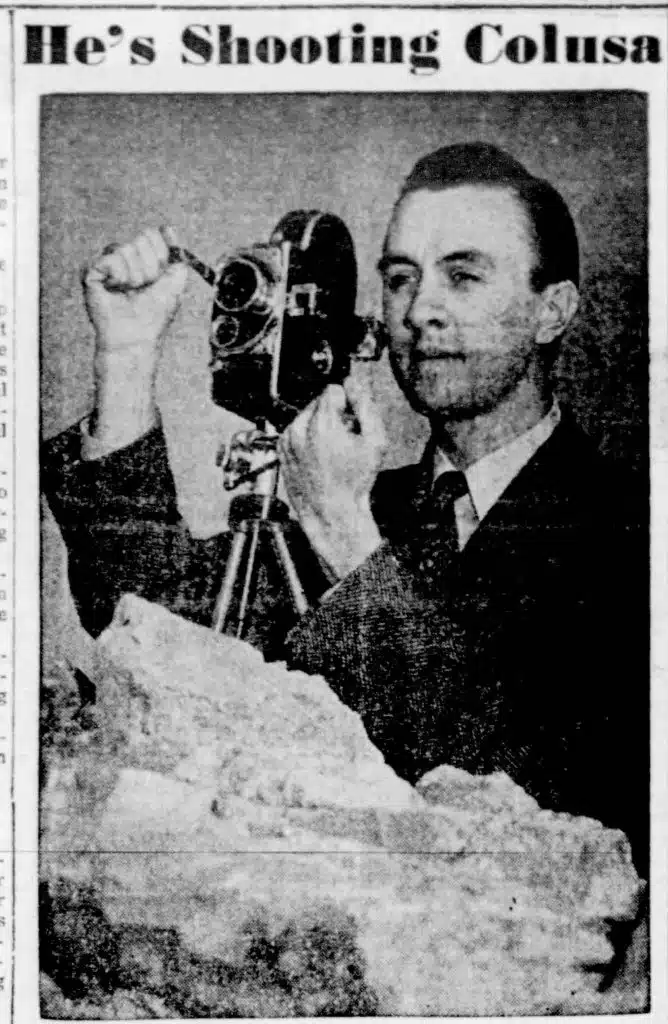
It turns out that others across the United States are just as interested in this man and his films as we are. There are postings all over the internet asking for help finding copies of hometown movies that their local newspapers claimed R.W. Allen and his company produced.
As stated previously, Robert Wilson Allen was born in 1915, in Salem, Washington County, Indiana. In many of his advertising campaigns for the “Life in…” movies and successive titles, it states that he was a former employee of Disney Studios in Hollywood. Was that claim to make him sound more credible as a filmmaker? It never said explicitly what he did at Disney – he could have been in animation, or simply a page in the office. He was only 22 when he started his independent filmmaking with Candid Theatrical Productions, so that didn’t leave him much experience at Disney – maybe 2 or 3 years. I would speculate that he actually did work there but could not obtain the level of status he wanted and ventured out on his own. Probably being a creative soul, he didn’t want to be held back.
Another claim in a newspaper said R.W. Allen had also been associated with the James Fitzpatrick Division of MGM Studios. This would have made sense, as this division of MGM was the Shorts Department, which produced the popular Fitzpatrick Travel Talks and The Voice of the Globe travelogues, “short” movies similar to what Allen ultimately did on his own. Fitzpatrick’s division produced roughly 200 of these short subjects for over two decades (1930 to 1954), famously pioneering off-screen narration and Technicolor cinematography in American travel documentaries. Perhaps Allen worked with the division briefly while in California, or perhaps Allen saw what Fitzpatrick was doing and decided he was just the man to go cross-country and take it to the common man. I would think Allen saw an opportunity and a market to be exploited and ran with it.
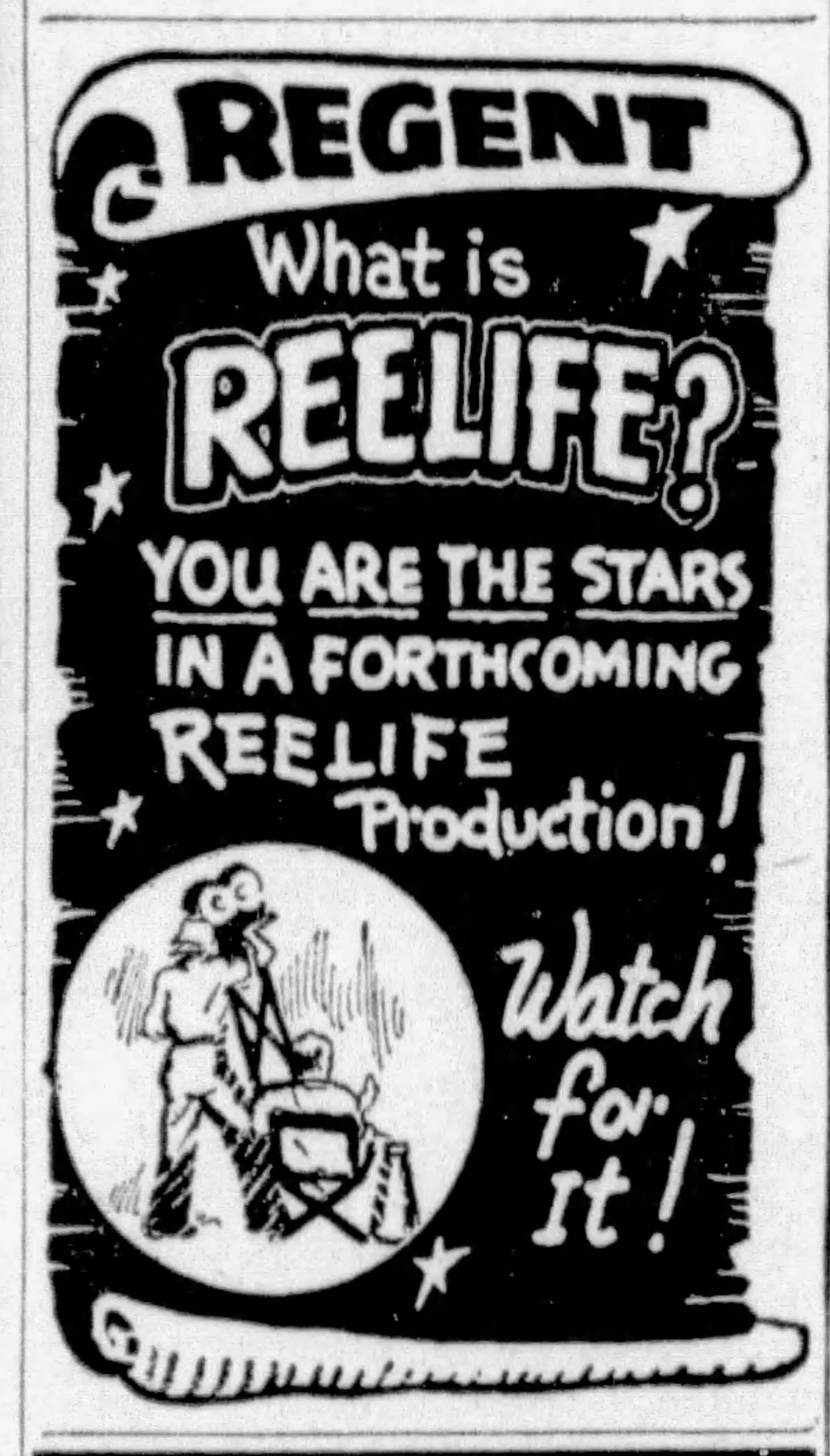
Was Robert Wilson Allen actually an innovator in movies? Who else was making hometown movies and marketing to the masses with lines such as “see yourself on the big screen” and “you are the stars.” Was Allen ahead of his time? How many others were doing that as early as 1938? Currently, I have yet to come across the primary resources needed to prove what I think R.W. Allen’s true significance to our historical record is.
The film that Allen made in Brookville was one of his earliest attempts. Advertisements for it claimed that, while in Brookville and Franklin County, he filmed beauty spots of the city, the Brookville High School basketball team in action, the Brookville High School band, churchgoers, aerial views, the casket factory employees, “school students in town and the surrounding towns,” Kiwanis dinner, Knights of Columbus dance, New Year’s Eve at Joe’s Place, and a “youth-adult meeting at the library.”
His business seemed to be booming. After Indiana, he traveled to such places as Wisconsin, Alabama, North Carolina, Ohio, New York, Arkansas, and North Dakota to film. Then the war years hit.
During WWII, the United States military became the predominant consumer of 16mm stock. The film was used to shoot tactical reconnaissance, combat footage, and create training films for new recruits. Because 16mm used a stable, non-flammable celluloid acetate “safety” base, the government tightly controlled its distribution. And fortunately for Allen, 16mm films were also saved and utilized for such things as civic propaganda films, which could be distributed to schools, factories, etc., explaining rationing, resource conservation, and anything else the government wanted the civilian population to know.
Allen, being the business-minded entrepreneur, was able to continue his motion picture work. It is unclear if he approached the government or if the government approached him, but R.W. Allen ended up making war films on the home front. He made morale boosters, films showing all the positive aspects of what the United States military and what common people were doing for the war effort in small towns across the country.
The September 1, 1949, Martinez News-Gazette out of California claimed that during the war, Allen made 53 training films for the Army’s Signal Corps alone.
To follow Allen and his company throughout historic newspapers is somewhat difficult, as it seems that the name of the company changed over the years.
I surmise that R.W. Allen began his filming in 1938 under the name Candid Theatrical Productions. They were reported as being out of Indianapolis, Indiana, and used that name through 1939.
The name Life Newsreels was associated with his advertising throughout 1940. They, too, were based in Indianapolis. That name appears to have ended quickly. Perhaps that title was dropped because of the connotation with Life magazine.
Reelife Motion Picture Company was the name Allen used from 1941 to about 1959. Once again, most newspapers say the company was based in Indianapolis, but by the time of WWII, the company was noted as being in Modesto, California.
From 1959 to the time the company ended under Allen’s leadership, it was Reelife Productions of Hollywood.
Why did the company name change over the years? Nothing could be found to answer that question.
Allen’s movie titles changed slightly over the years also, from “Life in…..” to “…in Reelife” to “The story of…..” to “This is…..” Perhaps the movie title changes occurred because Allen did end up going back to some towns a decade or two later and filmed the everyday population of a different generation. Likewise, changing things up keeps things fresh and makes it appear he is keeping up with the times.
It is assumed that Allen, who was 22 when he started his business in 1938, continued to produce films until between 1966 and 1971. He must have been extremely well equipped for what he was doing, and the company’s procedures streamlined from early 1939 on; for many of the newspapers used the same stock photos of Allen and his crew filming, and many lines of generic text were repeated in stories about other towns. The only text that changed was specific names.
Surprisingly, not much is mentioned in either the Brookville American or the Brookville Democrat regarding R.W. Allen’s visit to Brookville. He may have caught the town fathers off guard, just showed up and asked if they wanted a film made about their town, and off they went to film. An unfortunate contributing factor is that ours is only a weekly newspaper, so occasionally stories and details one hopes to find never got reported in detail as they should have because the event was over before it happened.
The newspapers in the towns he visited typically reported on what Allen and his crew were going to film and exactly where they would be and when, if you wanted to be in the movie. The newspaper of Edinburg, Indiana, reported that Allen was taking pictures of “everybody and everything from Aunt Sue’s cat to the most unsuspecting object of future moviedom.” While Allen was in the town of Franklin, Indiana, the newspaper reporters said, “the motion picture will include people at work, at play, at school, at “night life.” The last was added just in case you don’t care to be seen at a night spot when you are supposed to be at a lodge.”
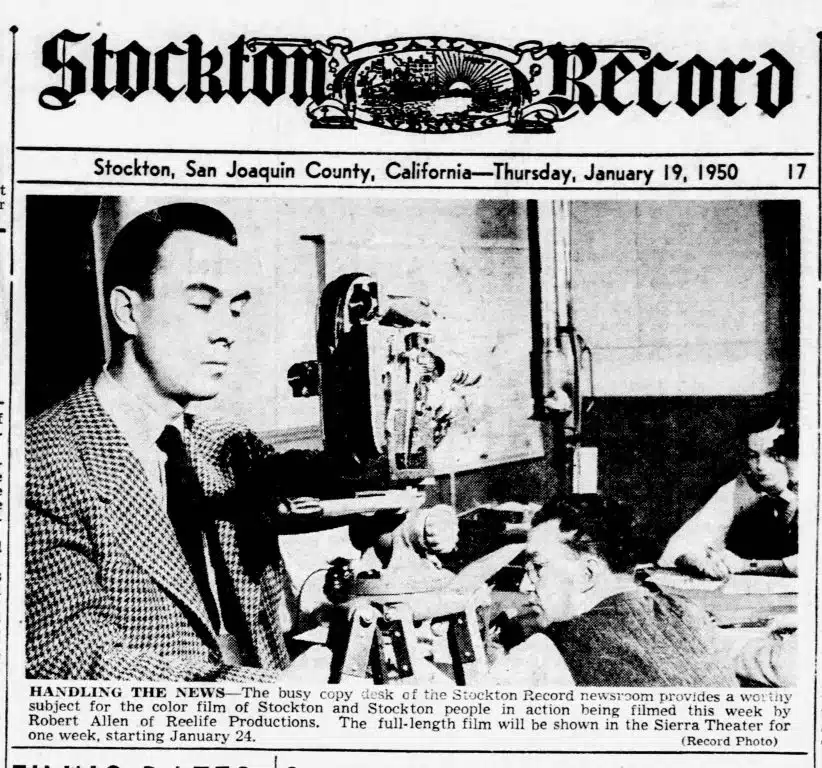
Allen’s filming was swift and professional. It seems that Allen and his crew would arrive at a location, and if the weather was good, they would film for a few days to one to two weeks. They would spend a few days to a week editing, then show the film and move on to the next location.
The films had no plot and were to simply be representations of small towns and the everyday activities of citizens. Initially, Allen’s company ran with two people operating cameras and expanded to four if necessary. They traveled with special lighting equipment and even special projection equipment.
Because Allen’s business relied on traveling town-to-town to shoot and process custom reels, it was incredibly labor-intensive and time consuming. In the 1950 federal census, R.W. Allen claimed to the enumerator that he averaged 70 work hours a week.
Depending on the town that was documented, the movie could last from 35 minutes to a full-length feature of about an hour and a half. The shorter “Life in…” movies were usually augmented with a regular feature film.
Biographically speaking, R.W. Allen was married at least twice. He married Kay McCarey in 1940. She was an integral part of his company and played a key role in filming and communications. Allen later married Ella M. Fuehring Rousselle in California in 1947, and they divorced in Oregon in 1955. Ella worked with the production company as well, and they had one son, Robert Scott Allen, born around 1949. The only thing known about his son is that it was in July 1958 when Allen and “Bobby” made it to Mansfield, Ohio, to do some filming. Father and son were featured in a March 29, 1959, newspaper article showing Bobby editing film and learning the trade at age 10.
I believe Robert Wilson Allen’s last place of residence was Rancho Santa Fe in San Diego County, California. He died in 2010 at the age of almost 95.
The lack of interest in the hometown movie fad ultimately came. The novelty of itinerant filmmakers capturing everyday people eventually wore off as the formula became way too familiar and home movie cameras became easily affordable for the common family to obtain. With the changing times, R.W. Allen had to keep himself and his company as a viable resource. His films ultimately became narrated documentaries of cities, giving people an opportunity to learn more about their own town and its many advantages, activities, and facilities. His films for chambers of commerce became more focused and geared towards enticing potential businesses to relocate. He was no longer traveling place to place every few weeks. Productions like these were more labor intensive, so Allen would sometimes spend months or even a year or two in one locale to get things documented in detail.
The March 29, 1959, Mansfield News Journal out of Ohio claimed, “Allen a former Walt Disney photographer and a producer of films for 20 years, specializes in civic ‘promotional’ films like ‘This is Mansfield,’ industrial films, travelogues, audio-visual aids, and movie shorts. He’s made more than 700.”
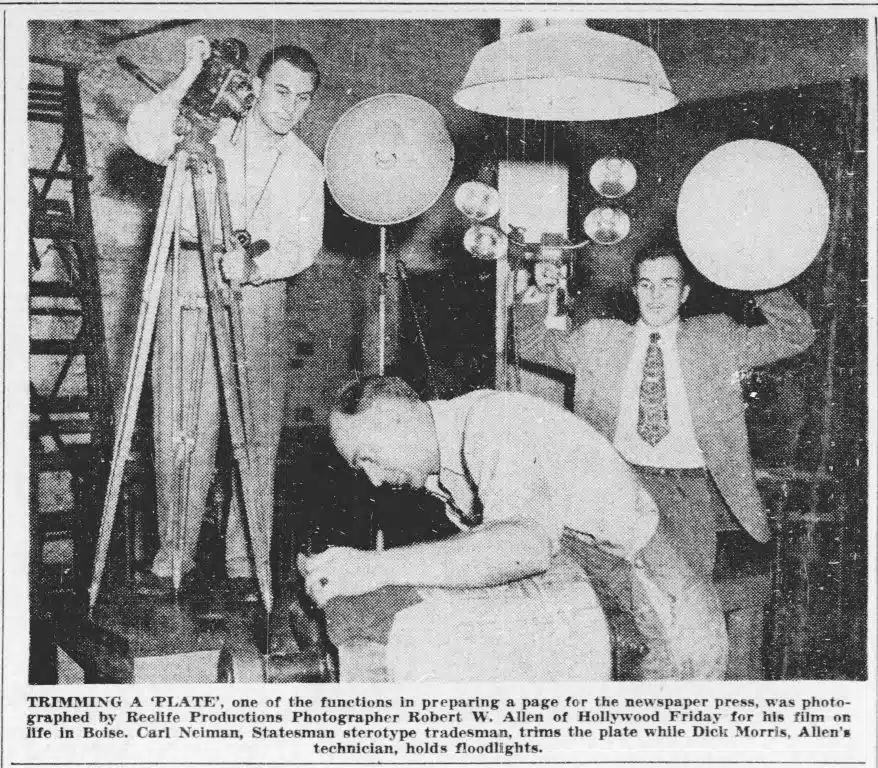
Considering R.W. Allen probably worked for at least another 10 years after that comment, there are probably close to 800 movies out there – somewhere – made by R.W. Allen and his production company. The Idaho Statesman of December 17, 1950, out of Boise, claimed their “film will be added to the Reelife Productions library where its crowd scenes or other adaptable material is made available to the motion picture industry for splicing into features or short subjects.”
Is there really an Allen Reelife Productions library of films stashed in an archive somewhere? What a treasure trove if that exists.
The Times Standard of November 9, 1949, out of Eureka, California, claimed “Allen…completed the production of a picture in Modesto. Excerpts of the many films taken, or which will be taken, in cities of California will be combined into a short subject to be shown nationally, Allen says.”
What type of movie short was that? A travel film? Something made for theaters, or short newsreel footage to be shown as a precursor to a star-studded film? It’s extremely difficult to unearth all the facts about R.W. Allen and his production company when I am 2,000 miles away from where he ultimately ended up and operated from. That’s why I wrote this article: to see who can provide clues or detailed facts about this Indiana native who has been lost to the history he tried so diligently to document.
The Sheboygan Press of November 28, 1940, had an interesting comment regarding Allen while he was filming in Wisconsin. “For historical purposes the picture should provide a kaleidoscopic record of life in Sheboygan in the year 1940, and it might be a good idea to launch such a project every decade in order to provide a pictorial record of community life for posterity.”
“While the watch-word in modern life is ‘Forward’, it is also pleasant to look backward occasionally and see what was being accomplished in the distant past and what sort of people were participating in activities.”
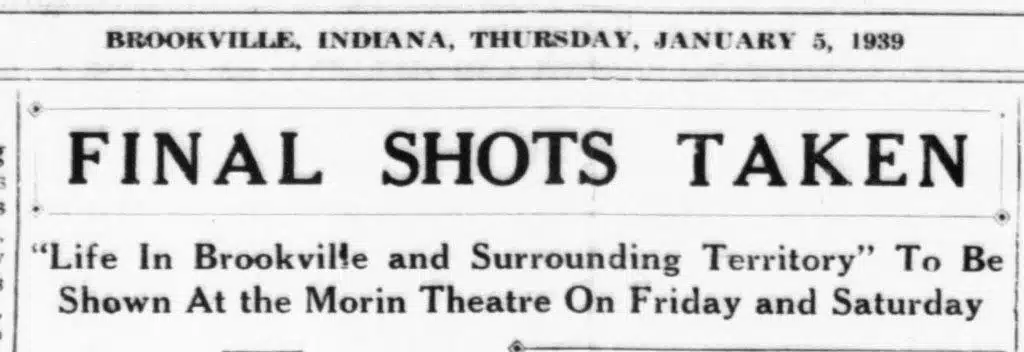
No written documentation has been found yet that states R.W. Allen of Candid Theatrical Productions actually left behind a copy or copies of “Life in Brookville” when he was done filming here.
Where is Brookville, Indiana’s “pictorial record of community life for posterity?” For that matter where are any of Robert Wilson Allen’s community films? He captured American life from Maine to California for at least three decades.
To date, I have only found four positively identified R.W. Allen films, “Greenville in Reelife,” which features 1941 footage of Greenville, North Carolina. The reel was discovered by accident when the town’s State Theater was renovated. Eventually, it ended up with the East Carolina University Digital Collections. You can view it at https://digital.lib.ecu.edu/61841.
The other one is “Life in Sebastopol.” It was produced in December 1949 in California. It is made available by the Sonoma County Library Special Collections Digital Archives and can be viewed at https://digital.sonomalibrary.org/documents/detail/504334. Also available from the same digital collection is “Life in Heraldsburg” at https://digital.sonomalibrary.org/documents/detail/504432.
And according to posts on Facebook and other online sources, “The Chehalis Story” from Washington state is available on DVD and runs about 80 minutes.
If you can share anything regarding the fabulous film time capsules that R.W. Allen produced or the man himself, I would very much like to talk. Give me a call at the Brookville Library at 765-647-4031.