By Julie Schlesselman, Local History & Genealogy Department Manager, FCPLD
…not really, but that’s what it appears when holding an old stereocard in hand.
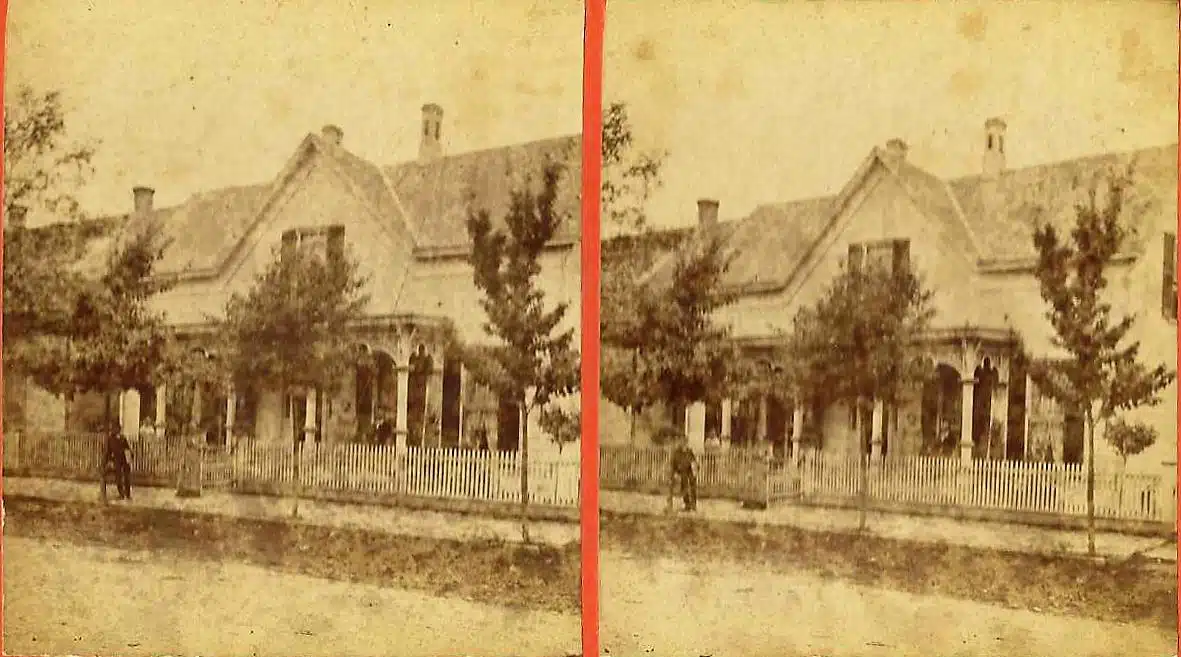
A stereocard features two photographs or printed images positioned side by side, one for the left eye and one for the right. The images are just ever so slightly different, and when a person uses the magical stereoscope, these two flat images are combined by our eyes and brain into a single image that gives the illusion of depth. Many of you will have encountered these old-fashioned 3-D viewers, especially if you have ever cleaned out an estate or have been to an antique market.
Baby Boomers and my generation will be best acquainted with the modern version of stereo viewing through the View Master. Both formats have the same principle, using dual images to create one 3-dimensional image. Stereocards, produced in varying forms from the 1840s through present day, were most popular from the 1870s to the 1920s, and the View Master, which was originally marketed and sold as a tourist souvenir, revived the 3-D viewing frenzy in the mid-20th century.
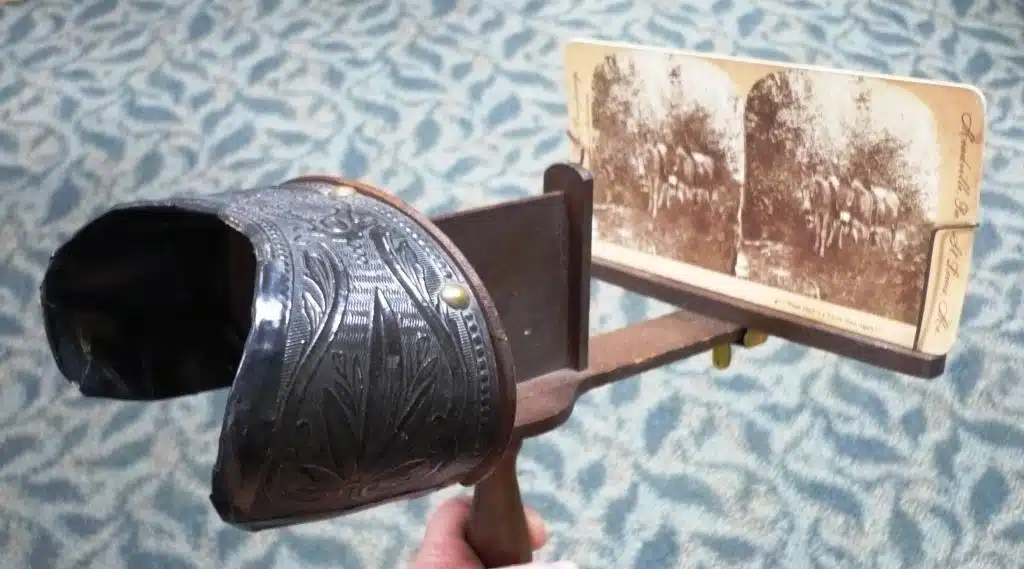
Viewing stereocards, using the hand held stereoscopes, with friends and family, was a past time looked forward to by many of our ancestors. The unique 3-D cards were even used for many years as educational tools in classrooms, giving the students the feeling of being there, enhancing their studies, and inevitably making the subject they were studying more memorable. To appeal to the education market, many publishers printed detailed captions or stories on the backs of stereocards, some descriptions being up to 450 words in length.
Stereocards, also called stereograms and stereoviews, were collected by many middle-class families in the late 19th century. Stereographs served as an important method of entertainment, education, and virtual travel. These wondrous little cards and the simple viewing machine could take people to places they could only dream about, such as across the world or to a big city. Stereocards were the main visual predecessors to our contemporary television and movies. Ultimately, the movies became the leading photographic medium, helping to knock stereocard viewing from prominence.
Mass production of stereocards was typical. The norm was that several large publishers dominated the stereocard market. For example, at the turn of the 20th century, the major stereocard publishers in the United States were Underwood and Underwood, Keystone View Company, and H.C. White Company. The major stereocard publishers sold their views by mail order, door-to-door salesmen, and in stores. Stereocards were sold individually as well as in boxed sets. I won’t take up space here with details and facts you can easily find regarding stereocards and stereoscopes in books and on the internet, because my main interest is Franklin County.
A majority of mass-produced stereocards have as their subject matter famous people, places, and things. However, there are many mass-produced mundane stereocards as well, including animals, factories, scenery, etc. The sheer thrill was to experience an image as if you were there, and sometimes the subject matter just didn’t matter.
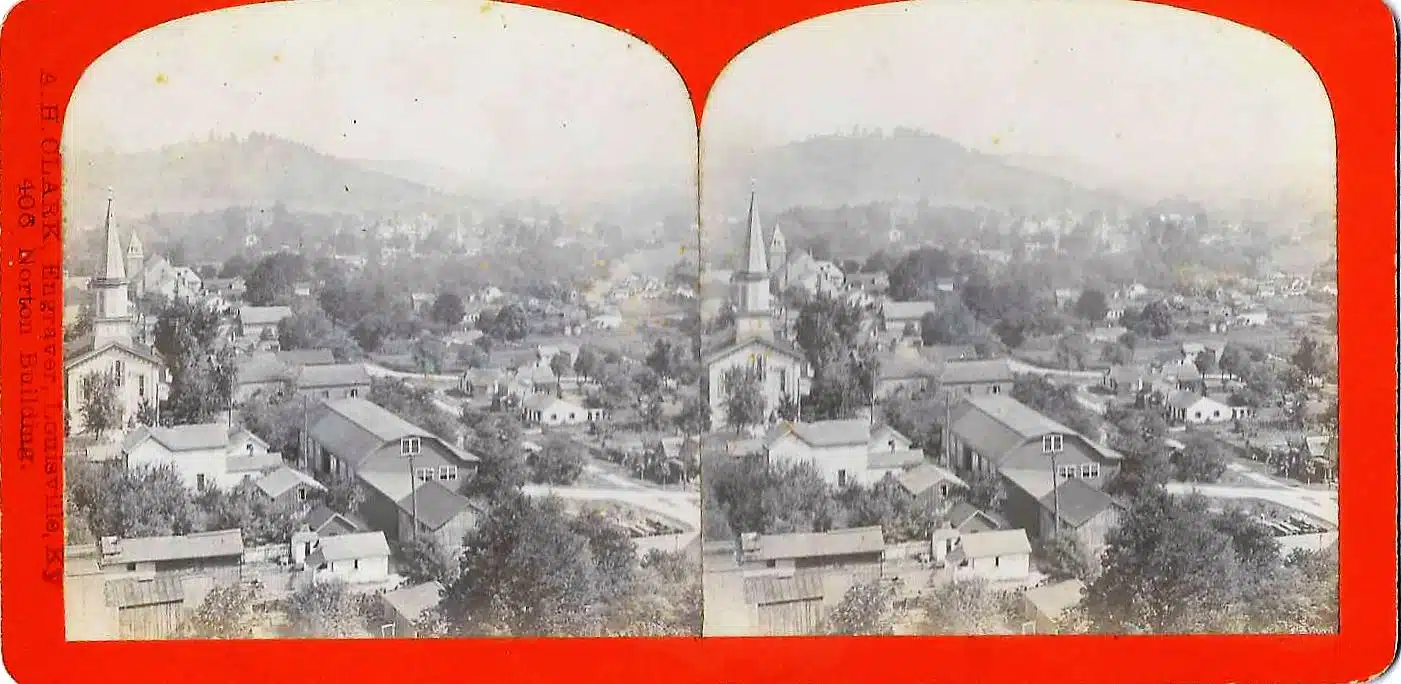
When the subject matter does matter is when its reflecting something local, and believe it or not, obscure stereocard images of Brookville and Oldenburg have appeared in the antique world over the past few years. These unique images have shown up in online bidding sites and private collections.
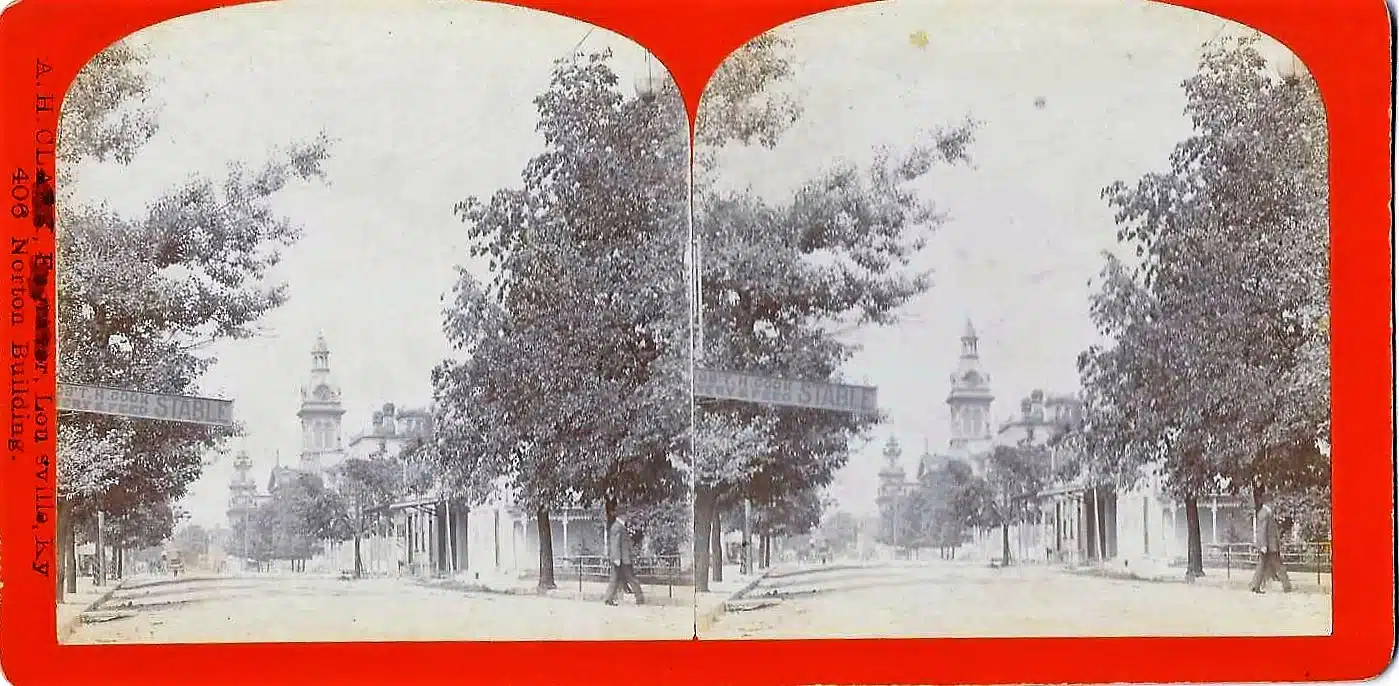
The more you read about the stereocards, the more you learn that it was not at all uncommon for independent photographers and hobbyists to produce and distribute stereocards themselves. Oftentimes, the independent photographers who captured the images remained anonymous, only the photographic developer securing his trademark on the final product. This was the case with William Birch Millis.
The Millis stereocard views are an interesting collection that belongs to Dr. James Senefeld of Tennessee. If you read this column regularly, you will recall the Senefeld name, as I mention him often. He is a wealth of information, has a huge photo collection, and is related to numerous families in Franklin County. Jim enjoys sharing and educating, and until he shared his Brookville images with me, I really had no concept of the relevance and importance of stereocards relating to our local history.
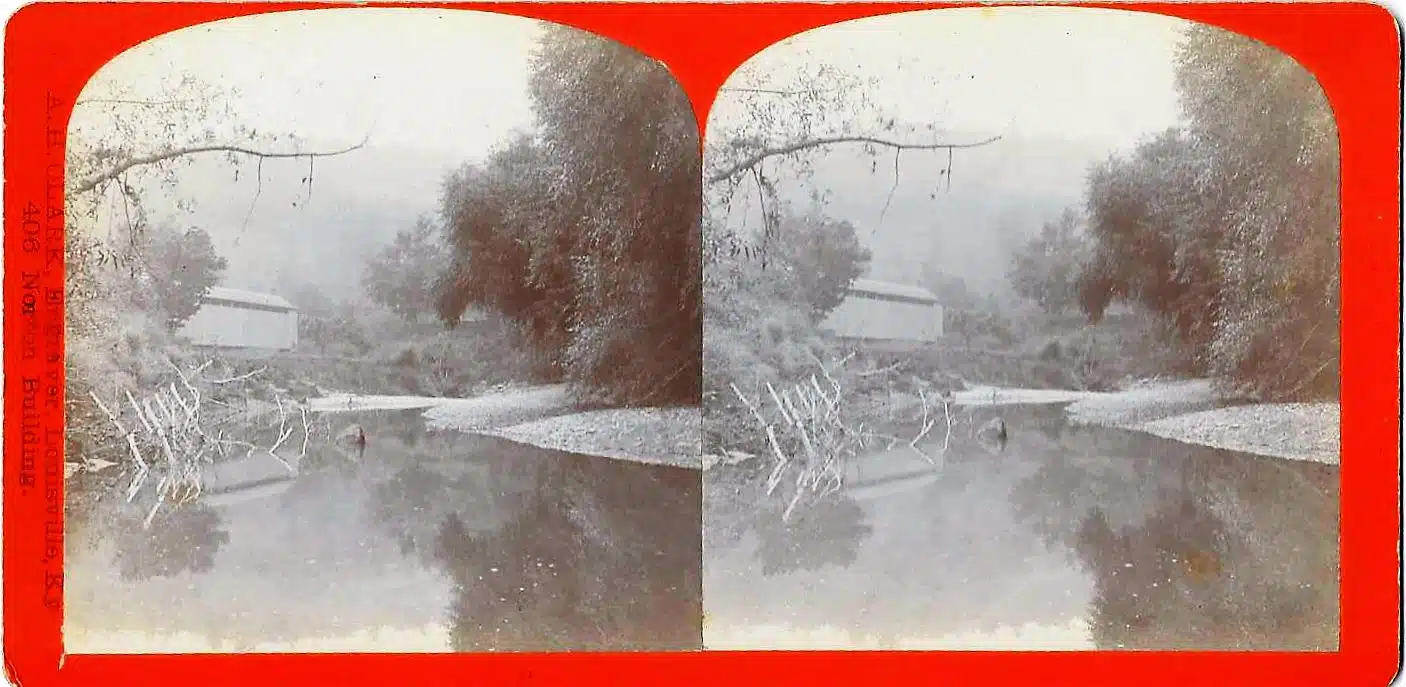
If one is lucky enough to have one of these stereocards and a stereoscope in hand, the local views give new insight into our communities, and overall, just a really cool way to step back in time and actually be there, since the person viewing can experience a local place 3-dimensionally as it looked over 100 years ago.
Until Jim told me about the handwritten captions that were on the backs of each of the Millis stereocards he was sharing with me, it appeared that the photographer was A.H. Clark, Engraver, at #406, in the Norton Building, in Louisville, Kentucky. Under that assumption, one would think that what had been photographed was in Kentucky as well. That was not the case. Millis had his own 3-D camera, traveled with it regularly, and simply had the Brookville images and others he had taken developed in Louisville.
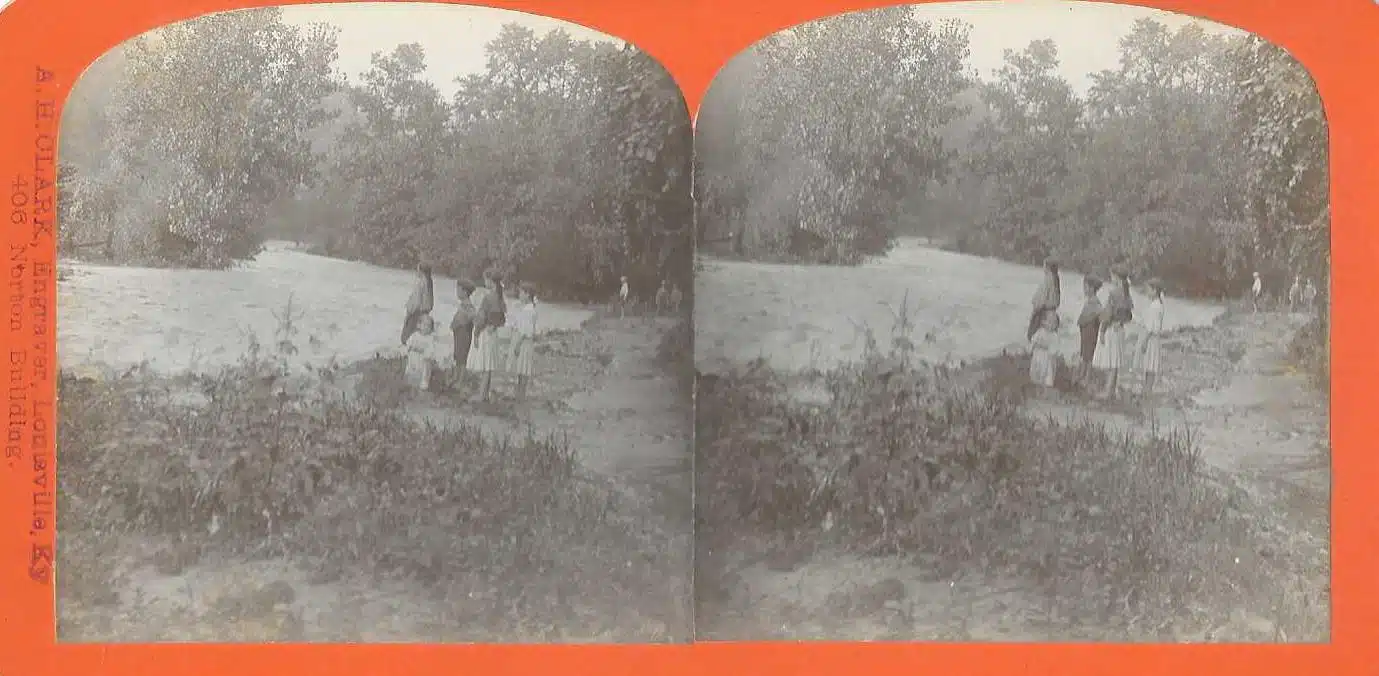
According to Jim Senefeld, William Birch Millis would take numerous photos on his visits to town. He was a first cousin to Annella Price Ferris who lived in Brookville, and a native of this place as well. Photography was a hobby for him and most of his photographs that Jim now possess were taken between the years 1904-1908.
Elias W. Millis was married twice; his first wife, Julia Roberts, died about 1853. He married second, Mary Elizabeth Shepperd, and they had three sons, William Birch Millis, being one of them.
William Birch Millis was named for his uncle, Major William Birch, who unfortunately died during the Civil War, at the Battle of Orchard Knob, Tennessee, in November 1863.
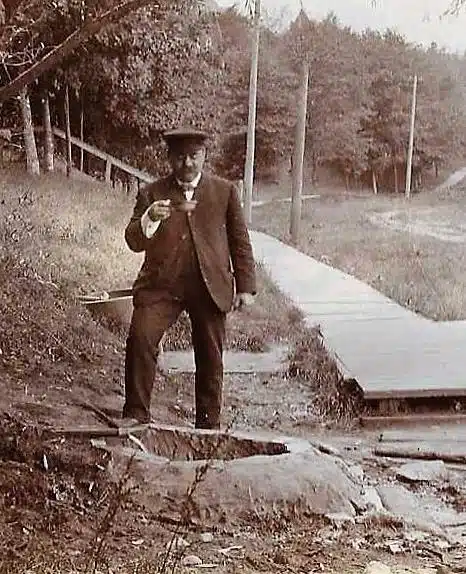
William Birch Millis was born in Brookville in 1862 and died in Evansville in 1908. Otherwise, to date, little is known about this man and his contributions to society. However, leaving behind a few unique photographs of our community from the early 1900s is contribution enough.
It makes one sit up and take notice when small photo collections related to local subjects and attributed to mere hobbyists and amateurs start to surface. Just as Franklin County, Indiana, appears as the topic of many 19th and 20th century postcards, I bet if we all paid more attention to stereocard collections, we would find a little more local subject matter than we ever thought out there, especially since anyone could buy a 3-D camera from the shopper’s bible – the Sears & Roebuck catalog.