By Julie Schlesselman, Local History & Genealogy Department Manager, FCPLD
This article ran in the January 26, 2022, edition of the Brookville American, and is in Forgotten Franklin County V. 3.
That was the handwritten notation taped to the front of a large old-fashioned scrapbook. It was written by Ruth Huber on July 24, 1985. Not knowing the entire background of this item but knowing that Ruth passed away in 1992, I can only assume that she was dispersing her personal property when moving from her home, or making sure that when she did pass, items of historic significance would go to the correct locations. Today, that black scrapbook that she bequeathed to the library, as well as a small collection of Carl and Ruth Huber’s photos taken during the Brookville Reservoir construction, are still here and safely secured in the Archives of the Franklin County Public Library District’s Local History & Genealogy Department.
The town of old Fairfield has been a topic of past articles. Carl and Ruth Huber, though not residents of the old town proper, played a part – a huge part- in the overall big picture in attempting to assist those Fairfield residents in distress. Correspondence in Ruth’s scrapbook is evidence that she wrote Congressmen and Senators, numerous times, in opposition to the proposed reservoir.
The Hubers’ compassion for those who were facing eviction from their family homes and who were facing life-altering events ended up helping by being the impetus for the area off Causeway Road that we now call New Fairfield.
Even today, the Brookville Dam and Reservoir is a sore subject for those who, and whose families, were displaced. At the time, sides organized for those supporting the project and those against it. Intense arguments arose regularly.
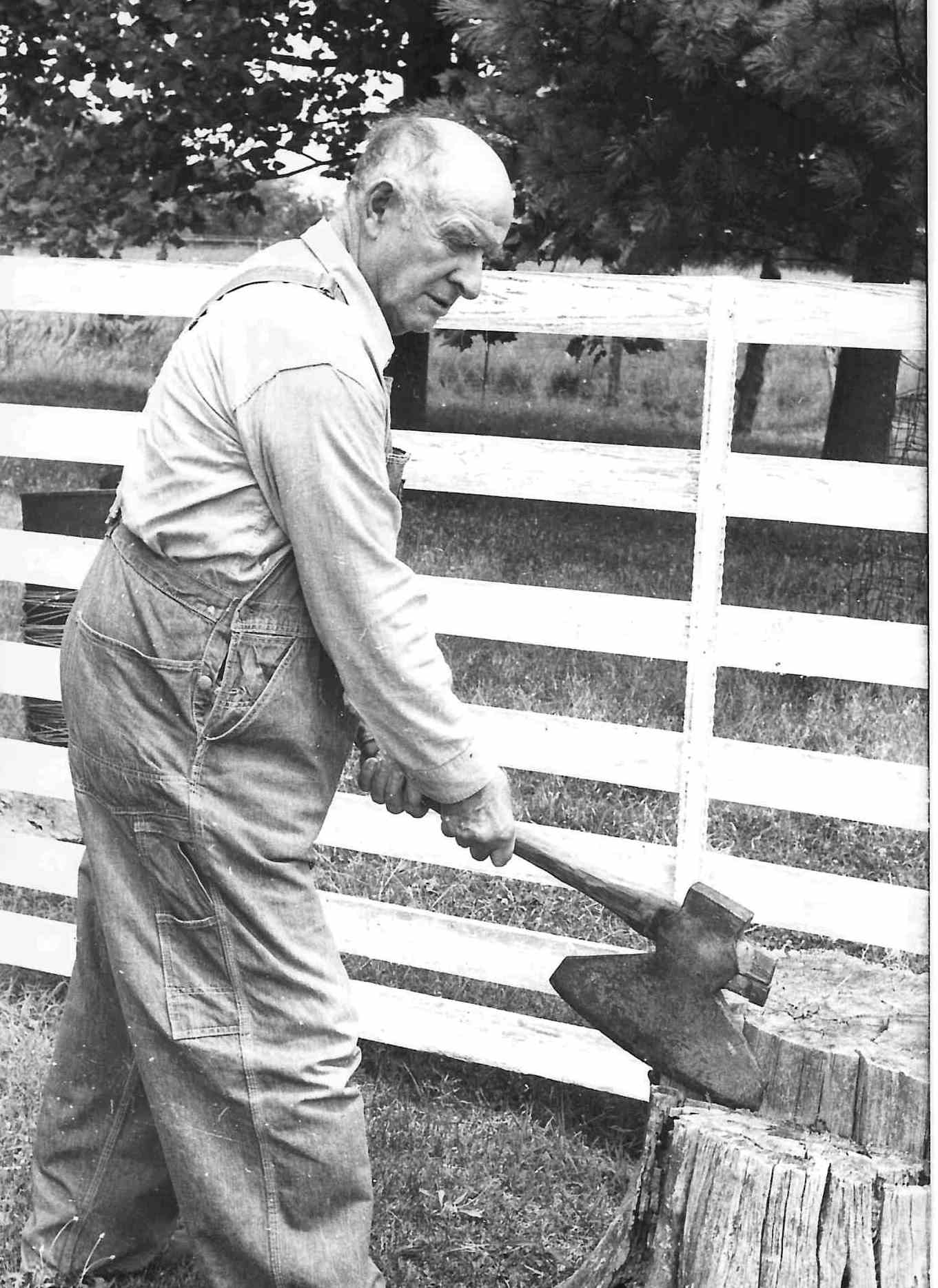
So, who were Carl and Ruth Huber? Very little biographical information exists.
While I have no first-hand experience with the Hubers or what transpired with their Fairfield activities over almost a decade’s time, I can glean facts from scattered sources and Ruth’s scrapbook to shed some light on the Hubers and New Fairfield.
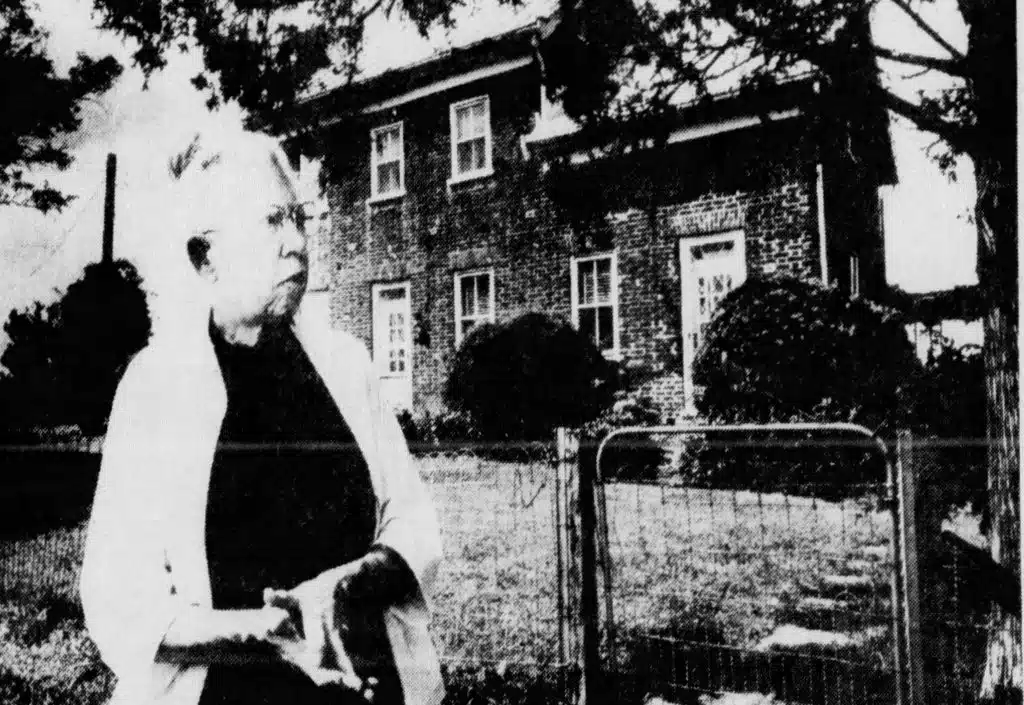
Carl Huber was not a Fairfield native. Siblings Carl, Edna, and Harvey Huber lived with their parents until their father, Frank, died. After Frank’s death, the Huber family farm in Highland Township near the county line was sold. At that time, Carl and his sister took their mother, Kate, to a new farm that Carl bought – it was a hilltop farm in Fairfield Township at what is today 9022 Tremont Place. They moved there in early 1932. It’s probable Carl and his mother and sister moved to this area because of the close proximity of relatives, as there were members of the Huber clan in Brookville, as well as the Smiester and Fieber families here, to which they were also related. The Hubers’ new house was very similar to the one they left in Highland Township, but the farmland at the Fairfield Township farm was much better. Carl’s mother, Kate, only lived five years, and then it was just Carl and his sister Edna on the farm.
In 1949, Carl married Ruth Elma Smith-Heckart-Speelman. She had been a widow twice. At that time of the couple’s marriage, Carl’s sister, Edna, moved from the Fairfield farm in with other members of the family who lived in Brookville. Carl and his new wife Ruth became very active in farm affairs and community activities with leadership roles in both. They enjoyed antiques and history, and Ruth was extremely proud that their home was well over 100 years old. Ruth estimated the construction date to about 1812.
As preparation for the Brookville Dam and Reservoir took hold, two organizations for assisting in relocating residents of old Fairfield formed, the Fairfield Relocation Committee and the Fairfield Redevelopment Corporation, which newspapers at the time also referred to interchangeably as the Fairfield Redevelopment Committee and Fairfield Redevelopment Incorporated.
The Hubers had a strong interest in their community’s welfare and pride in their land, and were the ones who spearheaded the relocation project that eventually morphed into the area we now know as New Fairfield. The Hubers helped to form the Fairfield Redevelopment Corporation in 1965. Their intent was to provide a new community for Fairfield residents and those on the adjoining farmlands who were to be displaced by the reservoir construction. Initially, the lots in this new town were to be sold to former Fairfield residents, but eventually the sales were opened to the general public.
Approximately 200 to 250 acres were set aside for what was to be called New Fairfield. The land for the new community came not only from Carl & Ruth Huber (who kept their house and approximately 6 acres for their own use), but also from property owned by Herschel & Hazel Klein and Byron & Elsie Apsley.
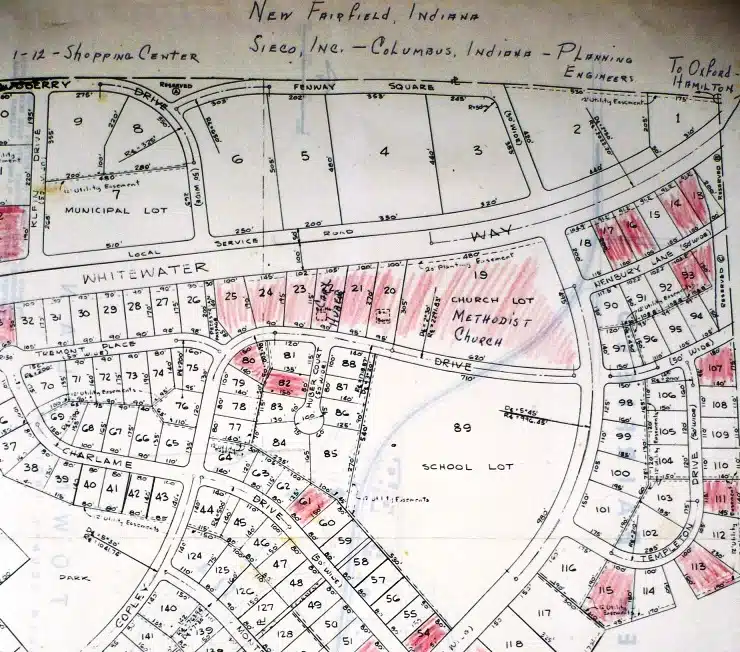
The Hubers’ historic home was to be the center of the new village. The new town was laid out by a professional planning firm and included different sized parcels for clusters of homes, as well as for a school, a shopping mall, a city park, and land for multiple church denominations. New Fairfield was going to be a big deal.
By August 11, 1970, the Cincinnati Post Times Star said the planned community of New Fairfield was in place. It had gravel streets, and the residential lots were now for sale to the general public. At the time the newspaper printed the story, four new houses were in place, and the Fairfield Masonic Lodge was almost done.
Newspapers from this same time estimated that “in 20 years the town of New Fairfield would grow to 20,000 people” due to its proximity to the reservoir. For quite a few years, there was great enthusiasm and anticipation regarding many things that would happen locally because of the reservoir.
What the Hubers envisioned for New Fairfield did not come to fruition. They had hoped that a majority of the old Fairfield residents could stay neighbors and move together. They hoped that the close-knit community of Fairfield would not have to die – just move. Unfortunately, few residents of New Fairfield turned out to be old Fairfield residents. Ultimately, people who had to leave old Fairfield had very little time in which to do so. Not even considered at the time was the fact that most Old Fairfield residents were in no position whatsoever to build a new home.
Old Fairfield residents who were being displaced had to quickly find new homes, new jobs, figure out what to do with their elderly loved ones, who also had to move, and consider the shocking exhumation and reburial of ancestors. Most residents were in such a state of shock and had little time to consider all their options. To keep life within some range of normalcy, many moved to what they could afford and ended up in Brookville, Connersville, Liberty, or Hamilton, Ohio. The overall development of New Fairfield took too long, and the old Fairfield residents were in no position to choose a lot, pick a house plan, hire a builder, and wait for their house to get done.
By 1972, the overall work involved with the redevelopment project and New Fairfield became just too much for the Hubers, and a majority of the property that remained was sold to Twin Forks Development, Inc.
Carl Huber died at the age of 71 on December 21, 1975, and is buried at St. Jacob’s Cemetery in Dearborn County. Ruth died at the age of 88 on November 28, 1992, and is buried next to Carl.
Regarding materials of historical interest, what used to be your small-town local library has slowly become a primary research facility as great as any other in our region. The Hubers is not the only Fairfield-related collection that the Local History & Genealogy Department possesses. We also have a wonderful color photographic survey of the town of Fairfield taken by Luana Himelick and a collection of Whitewater Valley Flood Control documents and photographs once belonging to Tom O’Connor.
For additional information about Fairfield, copies of the book Fairfield the Town Under the Lake are still available at the Brookville Library, and visit John Updike’s website at fairfieldindiana.com.
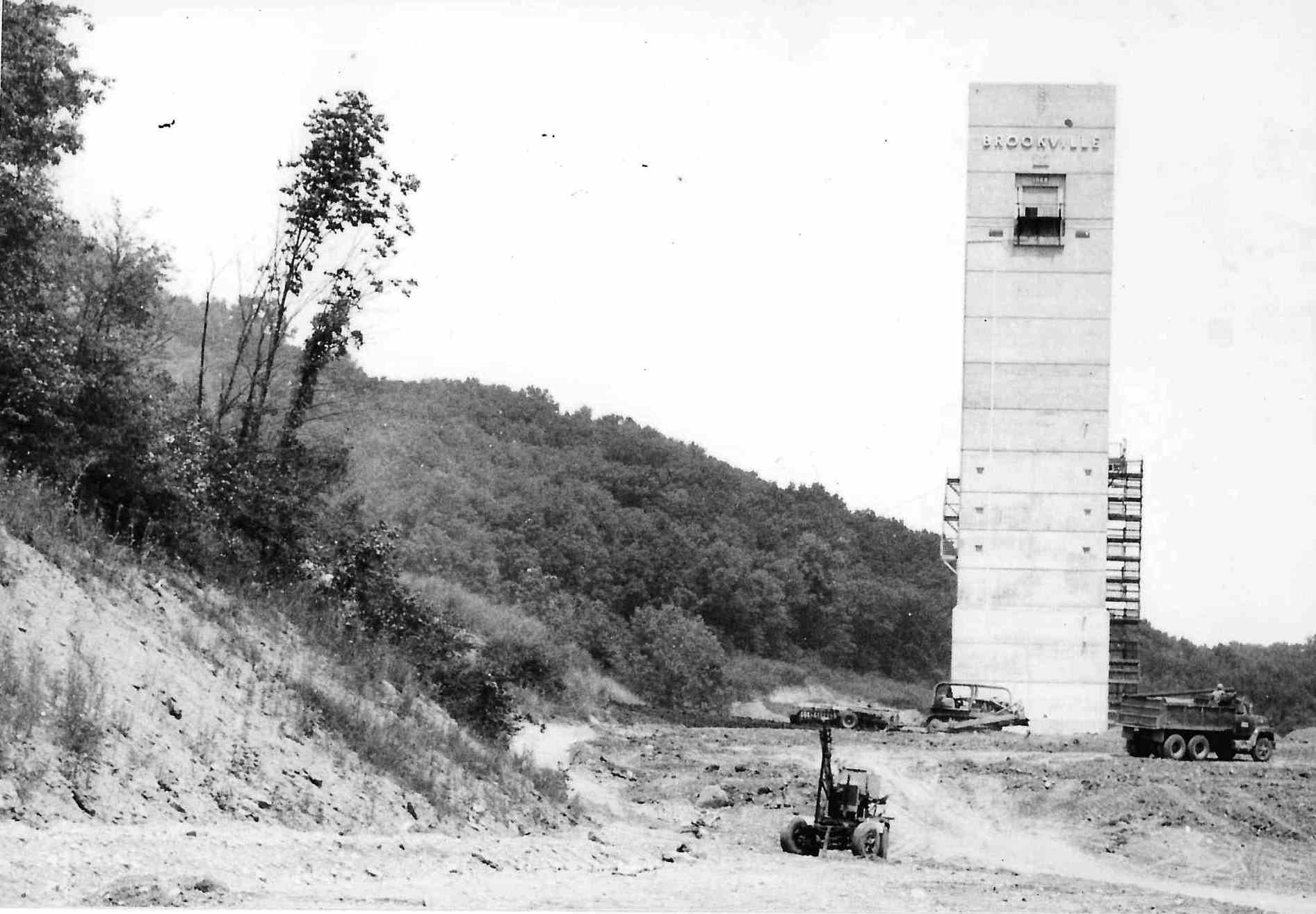
Side Note: Some people ask about the reservoir construction process and when the lake opened. An ever so basic and brief timeline is as follows: 1959-1962, the Whitewater Valley Flood Control Association was formed, the dam project was backed by Indiana and Ohio state senators, and the initial funds for construction were approved by Congress. 1963-1964, opposition against the reservoir grew, a comprehensive development plan was unveiled, and ultimately a timetable was given by the Louisville Army Corps of Engineers for reservoir construction. 1965-1967 relocation groups were formed, county meetings about reservoir construction and land acquisition occurred, Brookville Reservoir groundbreaking ceremonies occurred, Fairfield residents moved from their homes, and construction of the outlet works and control tower was completed. 1968-1972 construction was slow, then delayed, setting the project’s estimated completion date back at least two years; the overlook was constructed as well as the causeway, cemeteries were relocated, and the dam was constructed. 1973-1974, the lake basin area was cleared of timber and any remaining structures, ensuring nothing was left behind to float to the surface or interfere with future lake traffic; water was impounded to fill the future lake. 1975, the Brookville Dam and Reservoir was officially dedicated in July.