By Julie Schlesselman, Local History & Genealogy Department Manager, FCPLD
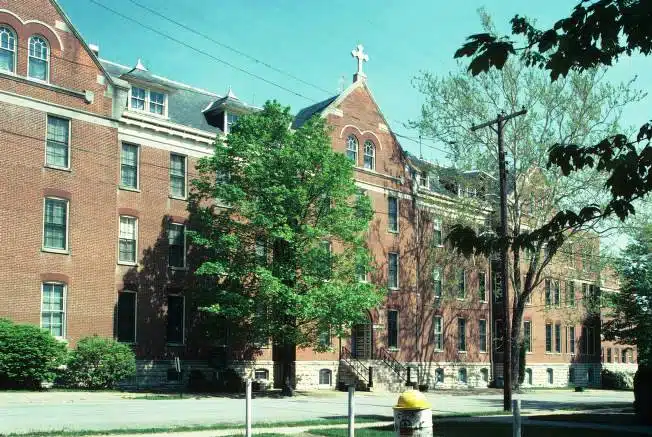
That was the term used in numerous letters to the editor – primarily ones sent to Cincinnati and Indianapolis newspapers. Locally known as the monastery, it was actually a friary because it had once served as a school for Franciscan Friars. It was located in Ray Township in the town of Oldenburg. Notice I said, “was.” It’s gone.
Claimed by many to be an excellent example of a “magnificent” Victorian Romanesque structure, it occupied nearly half a city block in the center of the historic town of Oldenburg at Pearl and Water streets.
Emotions ran high in Oldenburg as well as throughout our region, as the demolition of the nine-decade-old monastery was underway. July of 1986 was a very sad month for those interested in preserving our local history and heritage.
Prior to this large monastery being built, the Friars met in what was called the old stone church. Increasing membership in the order in the early 1890s and larger theological classes made it necessary for a new and more substantial structure to be built to accommodate the growing numbers.
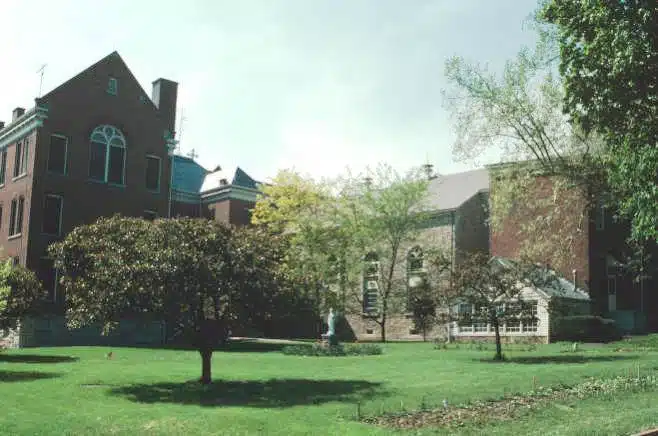
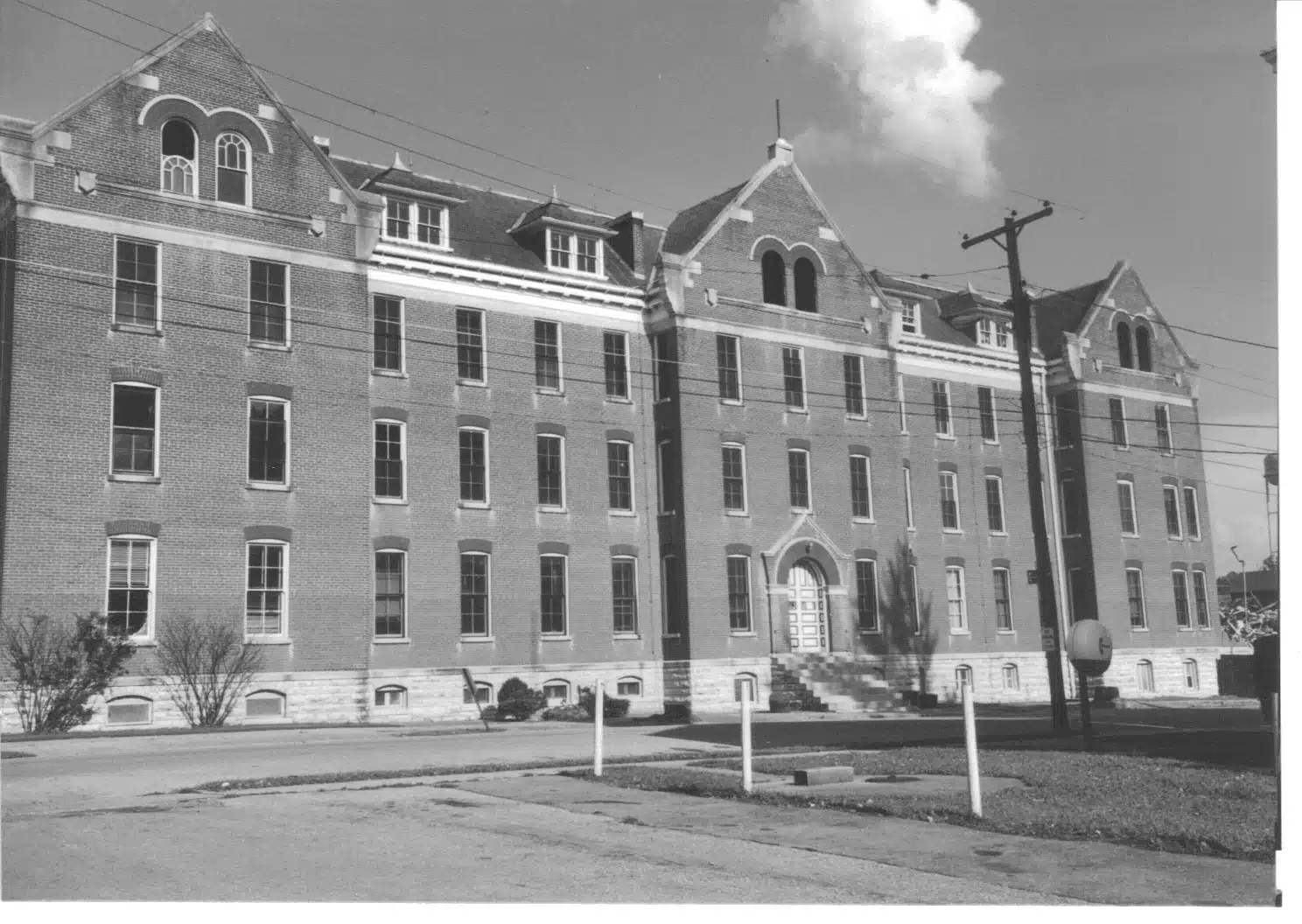
In 1894, the monastery that fronted Pearl Street was erected by George Holtel & Company. The new building included, among other things, the Friars’ living quarters, lecture hall, and visiting parlors. The new building was merged into one with the existing old stone church.
In 1930, the friary-monastery was extended almost to Water Street. It was at this time that the Friars were provided a fireproof library which housed their numerous valuable and ancient works on theology. Another area was added to the monastery in 1936. It had 105 rooms and over 40,000 square feet of space.
With diminished enrollment, the monastery ceased operations in the early 1980s. In addition, high heating and maintenance costs were part of the reason why the monastery was closed. While in use in its final years, the exorbitant heating costs had forced the closing off of almost all the rooms except for those on the first floor, where the last four remaining residents lived. And it was costing, on average, close to $1,900 a month for upkeep and maintenance alone.
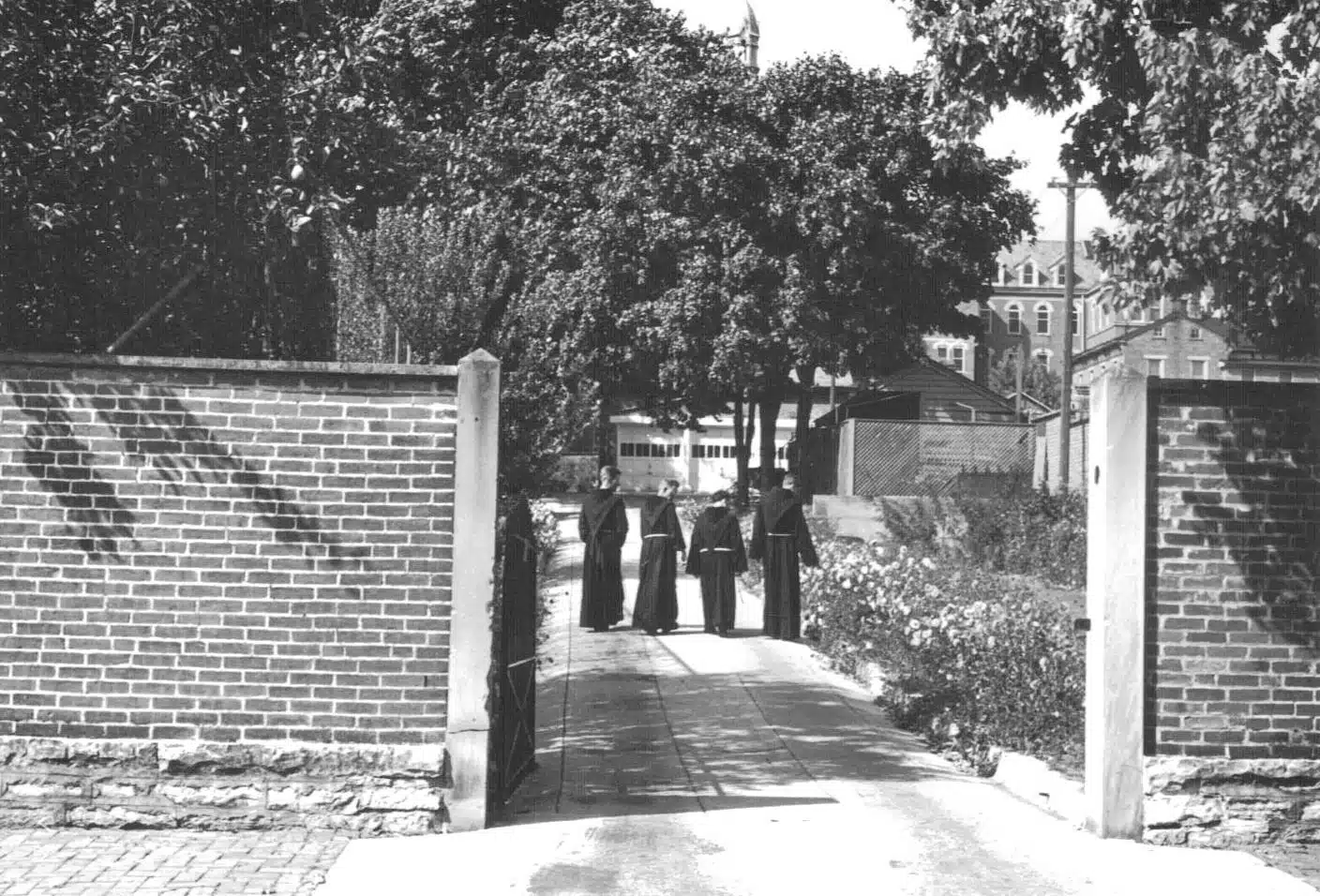
By early 1982, local preservationists were discussing alternatives and options for the structure’s future use. Some suggested that the monastery could be converted into a furniture museum to exhibit the unique craftsmanship of local furniture makers as well as highlight examples of other furniture manufacturers from around Indiana. Some suggested it be converted into an apartment building for senior living. And still some wanted to use the facility for a high-end hotel and restaurant.
Not only were some of the suggestions not in line with what the Church would allow in a former ecclesial building, but the costs required to meet current state building codes would be extremely high for anyone who took on the massive structure. There had been no real updates or modifications made to the monastery over the years, so major changes would be required, like that of modifying or rebuilding the steep, narrow wooden stairways to meet code. An elevator would have to be installed for accessibility, and additional plumbing and restroom facilities would be required. The entire place would need to be revamped to comply with modern fire and safety codes. Updating costs would have reached at least $1 million in 1980s money.
According to Halbert Kunz of the Indiana German Heritage Society, when “dwindling vocations forced the monastery to close….title was transferred from the Franciscan Order to the Archdiocese of Indianapolis in March 1985….” The Indiana German Heritage Society, Inc., and the Oldenburg Preservation Association, Inc., spearheaded local opposition to the monastery’s destruction.
As preservationists were steadfast on their viewpoint, the Church was just as tenacious on theirs. The building was no longer needed by the Church and upkeep was too expensive. The Church applied for, and was granted, a demolition permit.
Long story short – the demolition was planned by the parish and the Archbishop of the Catholic Archdiocese of Indianapolis for the Summer of 1986. Preservationists objected, and a temporary stay was granted. Unfortunately, in just a day, on July 15, the monastery was purposefully and partially destroyed despite the fact that it should not have been touched prior to a hearing scheduled for the morning of July 16.
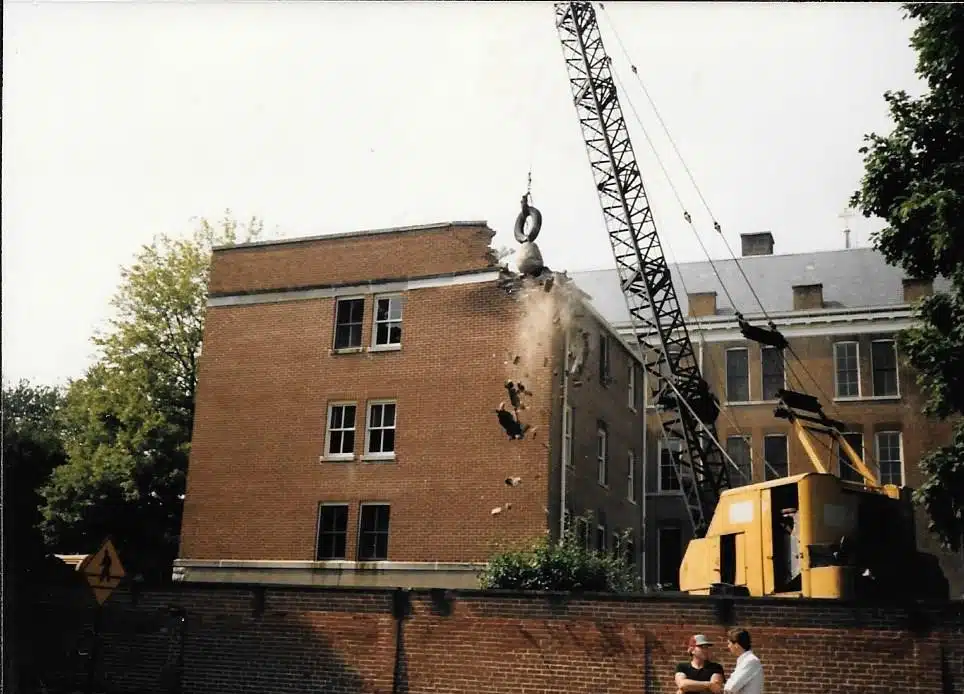
What was reported to have happened was miscommunication. The contractor who was to raze the monastery came ahead of schedule and was “not aware” of the demolition postponement, so he began late that evening. A restraining order was issued against the contractor, and additional demolition was temporarily halted. However, on July 17, demolition was allowed to continue, and the old monastery was pretty much gone in a week.
Note: Additional images of the Oldenburg monastery, other than those identified and used with this article, appear on the Indiana Memory Project at https://digital.library.in.gov. They are from the Indiana Historic Architecture Slide Collection of the Indiana Landmarks Historic Architecture Collection.