By Julie Schlesselman, Local History & Genealogy Department Manager, FCPLD
This article ran in the April 6, 2023, edition of the Brookville American and in Volume 4 of Forgotten Franklin County.
Practically everyone in Brookville has heard the story of Phoebe Meeks. To a few readers, her story may be new.
She is famous. Not for doing anything fabulous or inventing anything unusual, but for doing something life-changing. An event that changed her life only, and no one else’s. She is famous simply for being a recluse.
Her story has been retold time and time again over the past 115 years – each time changing slightly depending on who was writing it – and embellished each time with loads of statements that weren’t facts.
Phoebe would probably be mortified if she knew the private story of her difficult life was once again being rehashed.
So then, why am I bringing it up? Because Phoebe Meeks is only part of the story relating to today’s address of 819 Main Street in Brookville.
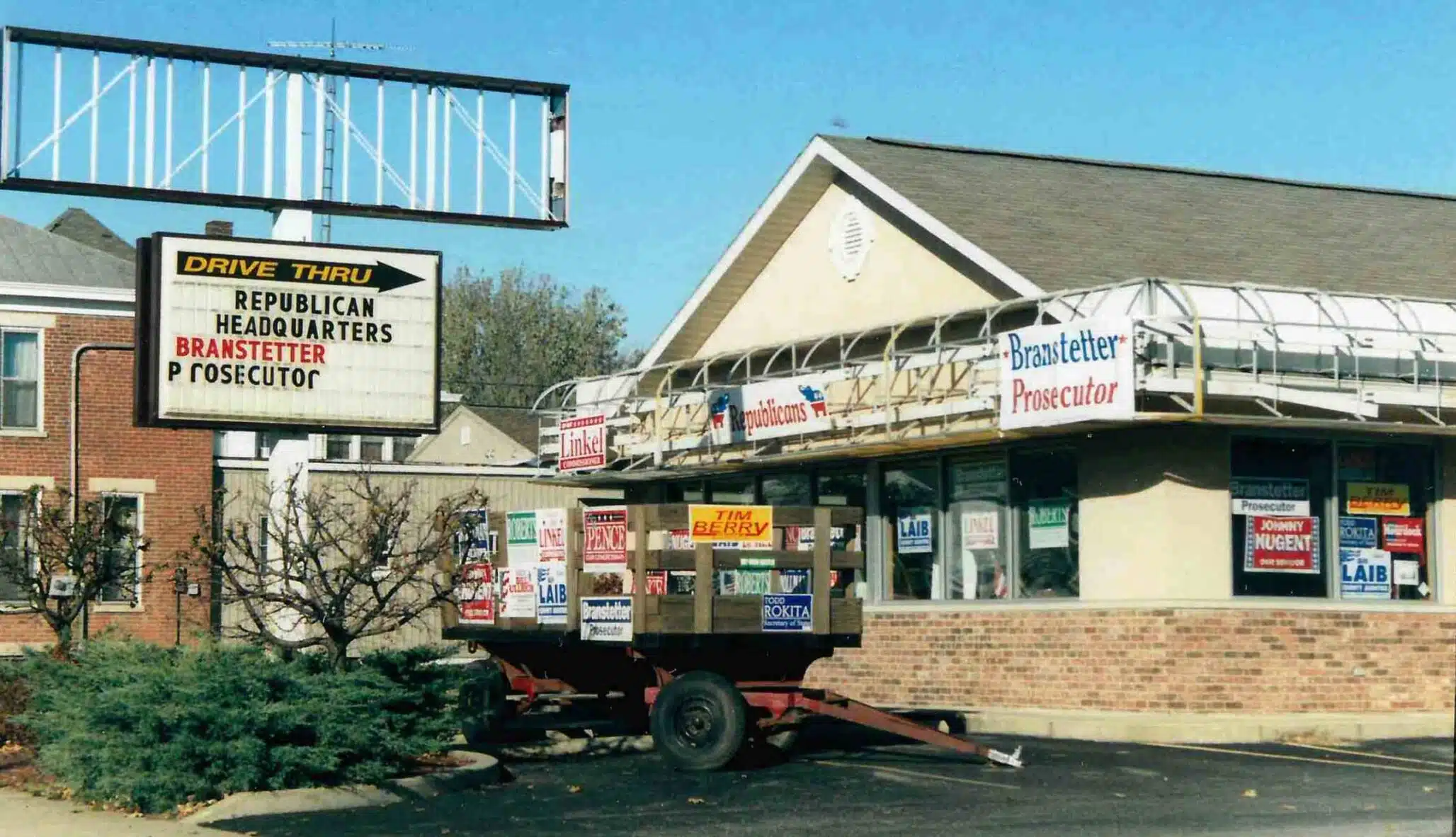
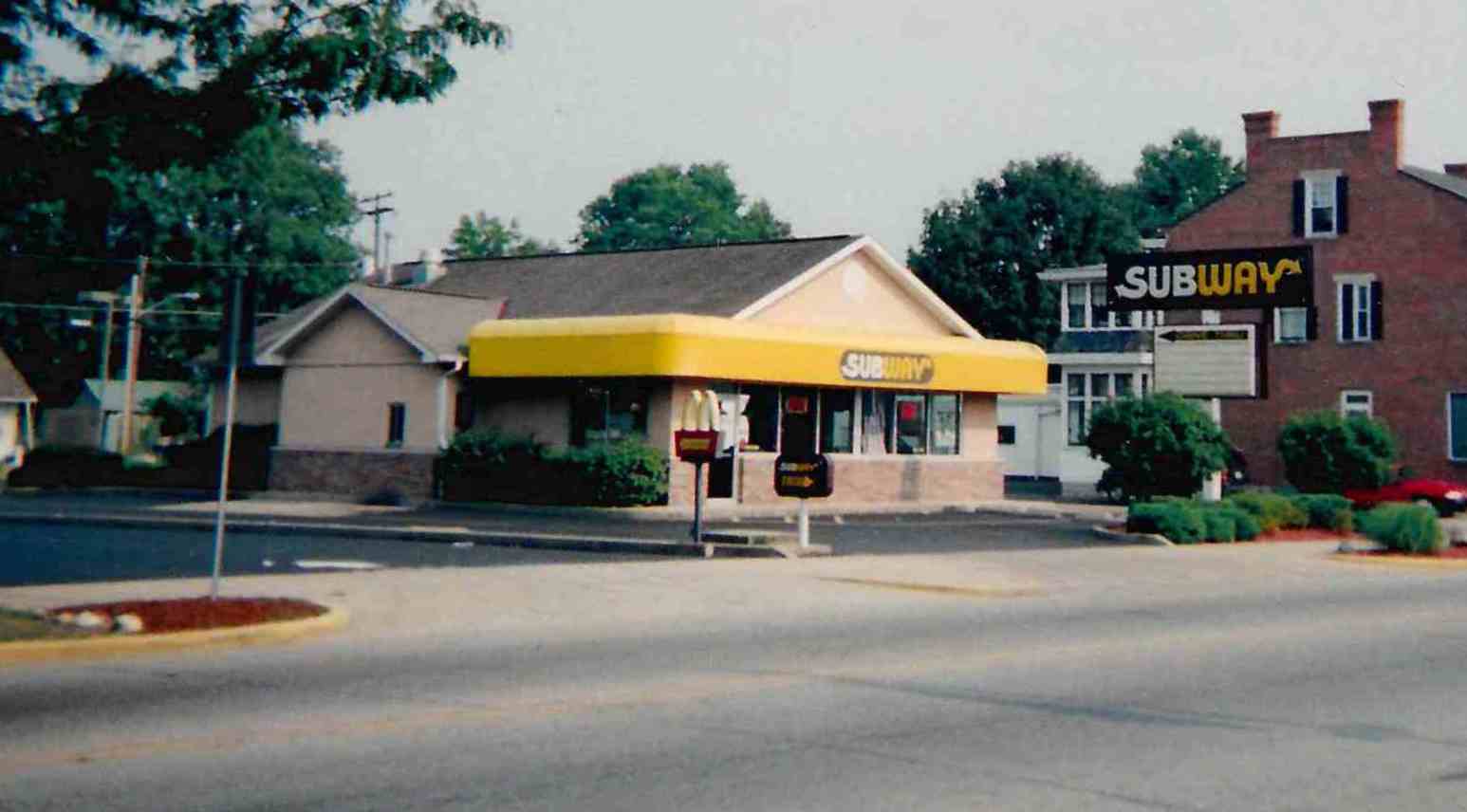
I try each week to give our readers a new twist on our local history – something different – or a new perspective on an old topic. I bring up Phoebe this week because I bet a majority of you who eat at El Reparo in Brookville have no idea what once stood at this particular lot on Main Street. In fact, I bet many of you don’t even remember when the Subway sandwich shop was here before the Mexican restaurant.
In 200 years, only four primary buildings have stood on this site – since it is a low number of structures, we are very fortunate to have images of all the buildings that have graced this location.
The first pioneer structure on this site was what everyone called the Meeks’ house. It was known by that name for over a century.
Joseph Meeks and his family moved to Brookville, Indiana, in 1819. Once here, he advertised his trade in the local paper, posted for want of an apprentice immediately, and built a 2-story frame house. Joseph was a cabinetmaker and carpenter, and was known as one of the most excellent in our region. The small wing on the north side of the house was utilized as Meeks’ showroom and shop, where furniture and coffins were made and displayed. The name “Coffin Hall” was given to this little sales area by the students of the nearby Brookville College.
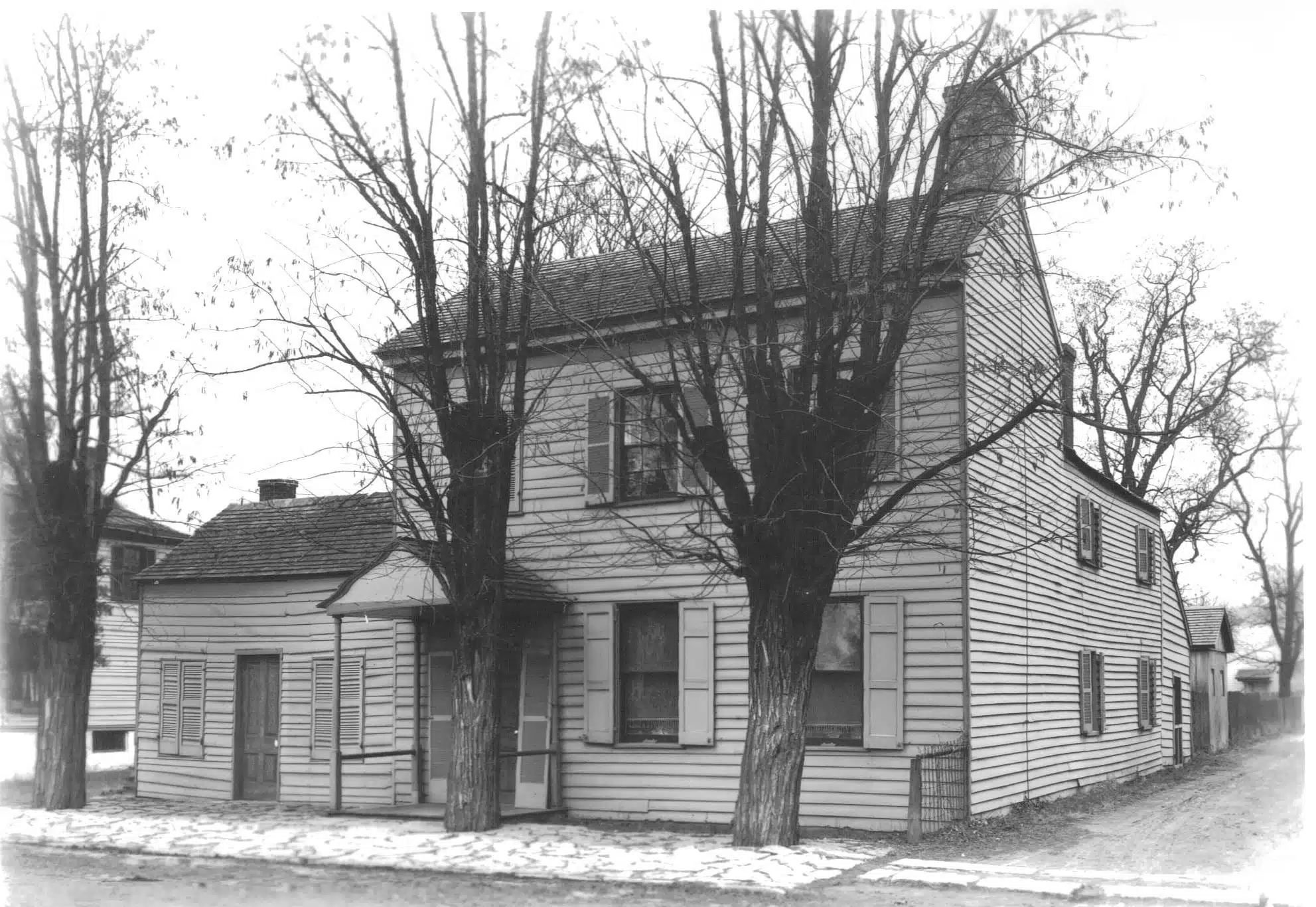
It’s been assumed and passed down through word of mouth that the small northern part of this structure was an addition put on by Meeks. But that doesn’t make sense, as it appears a little more primitive and slightly different from the style of the larger part of the house. An addition surely would have been of the same style and of a better quality. It’s possible that Meeks constructed this small section first as a place to live while he was building his family’s 2-story home, always intending to utilize it as a shop after they were settled. Another scenario is that Meeks bought the property with the small structure already on it and built only the 2-story structure. Regardless, the photo of the Meeks’ house that accompanies this article is one of the best historic representations we have of one of the earliest structures that stood in Brookville – a frame domicile that was built in 1820, with possibly a slightly older wing.
Interesting recollections of the Meeks family, retold by an old acquaintance, Caspar Fogel, appeared in the September 3, 1908, Brookville Democrat. Fogel said Phoebe’s sister, “Lucinda was beautiful in stature, full of kindness, gentle, and harmless as a dove. Her father [originally] came from New York, engaging in the cabinet making and undertaking business. He would furnish a genuine walnut or cherry wood coffin, of his own make, for five dollars. His coffins were somewhat different in shape and lined inside with bleached muslin. When the last look upon the face of the departed had been taken, Mr. Meeks would take a hammer and some nails out of his pocket and nail the lid on the coffin. Then four men and a bier would be the hearse. If the load was heavy, eight men would be selected for the duty.”
![Photo with caption: A likeness of Phoebe Meeks said to have come from a photograph. It appeared in the July 22, 1900 St. Louis Post Dispatch [Missouri].](https://fclibraries.org/wp-content/uploads/03-St__Louis_Post_Dispatch_Sun__Jul_22__1900_.jpg.webp)
Unfortunately, the legend of Phoebe Meeks is what’s associated with this house rather than it being the location of the excellent and well-known cabinetmaker, Joseph Meeks.
So I said Phoebe was famous; that’s because her story is not just local news. For some reason, the tale of Phoebe Meeks becoming a recluse appeared all over the country, including Missouri, Washington, Texas, Wisconsin, and the list goes on. In fact, it would be easier to name the two or three states that didn’t make Phoebe’s sad tale newsworthy. Phoebe’s story even appeared north of the border in Regina, Saskatchewan, Canada. Oddly, over half a century after her death, her story again resurfaced in March 1964 and appeared in the Ripley’s Believe It or Not column that ran in a Santa Fe, New Mexico, Sunday newspaper.
The years and years of narratives all had a similar storyline. However, they were very over-exaggerated and falsities in many of them. Phoebe’s unusual and private story seemed to blossom and grow in depth and detail every time it was rewritten and printed.
Upon her death, it was said by some who knew her that she was “the subject of many newspaper articles which glittered with but little truth and a great deal of imagination.”
Why was she a recluse? Long story short, a young Phoebe Meeks broke up with her beau, Hadley Johnson, in 1835. Some stories say they had an argument; some stories infer that she had a mental breakdown of sorts and refused to ever see Hadley again. Even Hadley was confused by the whole situation. Anxiety took over, and Phoebe increasingly became distraught, or embarrassed, or just came down with anthropophobia (the fear of people), and simply secluded herself in her childhood home, never again socializing with anyone from the general public. According to the stories, Phoebe died 65 years later, in November 1900, in her self-imposed asylum.
Over the years, as the Meeks family died off, only Phoebe and her sister Lucinda were left. Lucinda also became a spinster because someone had to care for and provide for Phoebe. To earn money and support themselves, the sisters ran a millinery shop from the old “Coffin Hall.” Lucinda was the only sister ever seen by customers. Only a hand closing a door or pulling the curtains shut was what the public ever saw of Phoebe. Just as their father was known for excellent woodworking, the sisters were known for some of the most beautiful millinery, hand stitching, and needlework around. They were outstanding craftswomen in the fiber arts.
Lucinda was the last surviving member of the Meeks family and died January 26, 1921, in the home her father built. It was the Meeks’ house from start to finish. What a grand estate sale and personal property auction that must have been. One hundred years of one artsy-craftsy family’s belongings and a pioneer merchant’s ledgers and journals. Lucinda and Phoebe, and their parents, are buried at the Old Brookville Cemetery.
The Meeks’ house was torn down three years after Lucinda died. The May 15, 1924, Brookville American said that “workmen were engaged for several days to wreck the Meeks’ house.” The article said the framing of the house was of solid oak lumber with handmade laths; it had a mortised stairway and hand-blown glass windows.
At the time, this newspaper article ran, it said the lot was owned by the American Legion and that they had intentions to build a structure “dedicated to the soldiers living and dead of this county” on that site.
What transpired next is unclear, but the Legion did not build anything on this site.
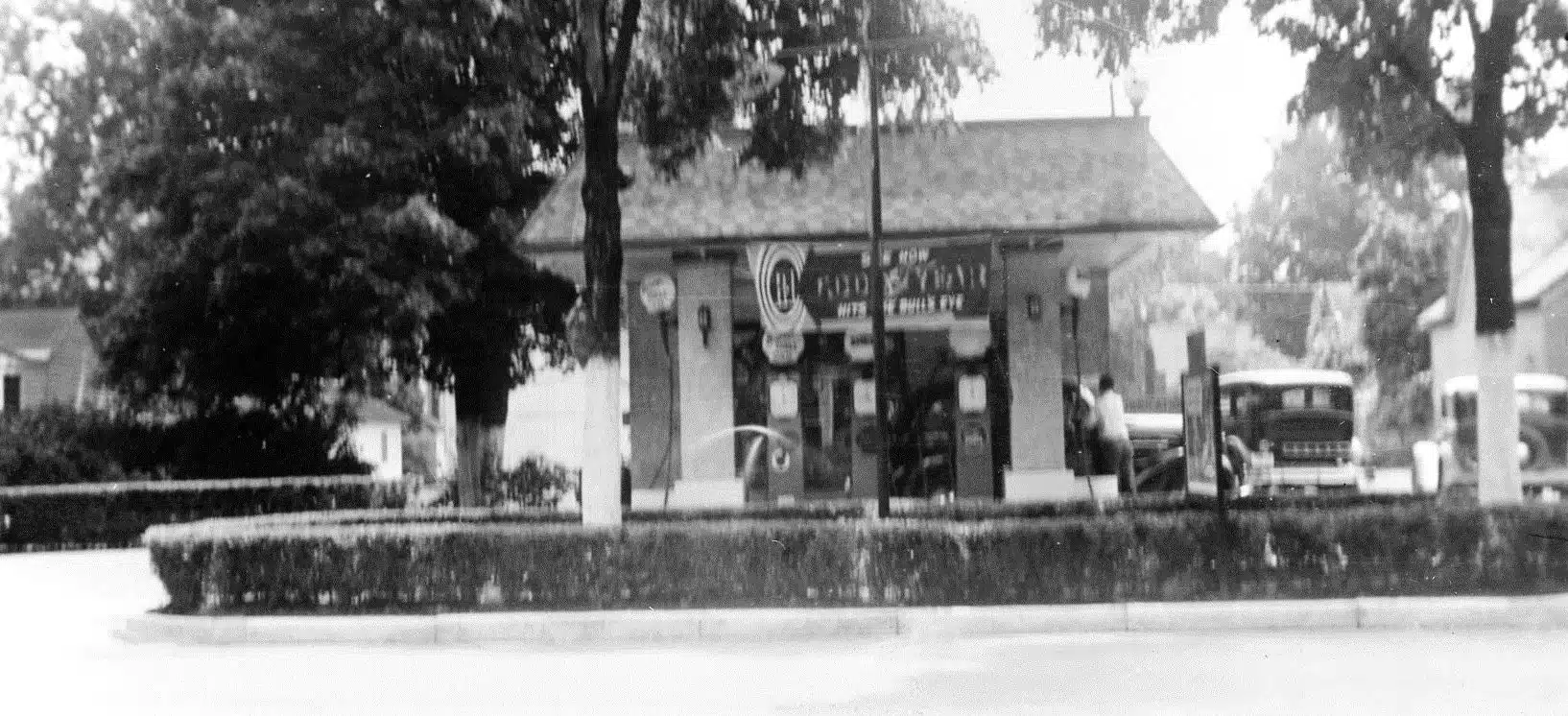
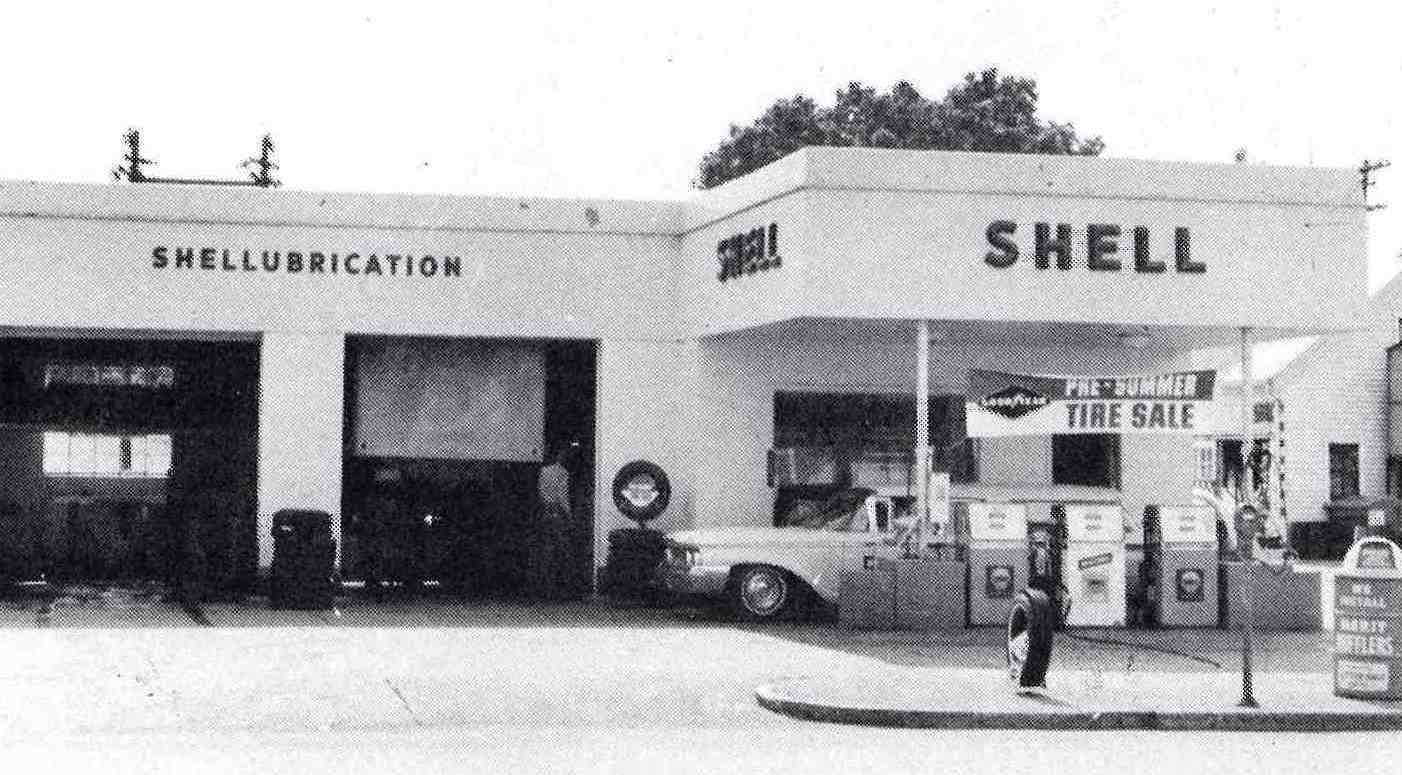
A Shell filling station was built here in 1924. Allie McCarty, the long-time proprietor of the station, operated the place for decades. In 1959, two of his employees, Elmer Vonderheide and Bud Moster, bought the place and operated it in partnership until Bud died in 1980. At that time, Elmer bought Bud’s interest. Most of the Vonderheide children worked at the station over the years, but it was Elmer’s son, Allen, who eventually took over operation. In 1992, Vonderheide’s Shell Station was forced to close because of costly, imposed EPA requirements.
After the gas station closed and was torn down, construction of the Subway sandwich shop began in 1995. It celebrated its grand opening on this site in early 1996.
Once Subway moved to its new building on SR 101, the Main Street building sat empty briefly until El Reparo moved in around 2008-09. Over the years, the owners of El Reparo have had an outdoor dining area, which was eventually enclosed to expand the indoor dining area.
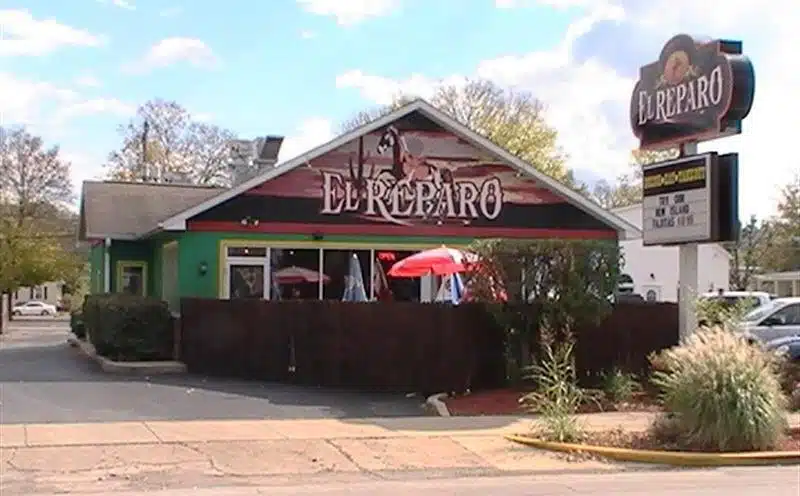
I am sure that the Meeks could have never imagined the transformations that their house and property would experience over 200 years… just as the Native Americans who came before them could not fathom what was to become of their land.
Next time you eat at El Reparo in Brookville, think about what might be in that same location 200 years from now.